THE RIGHT TO KNOW AND THE DUTY TO REMAIN SILENT
ANASTASIIA HRYSHCHENKO
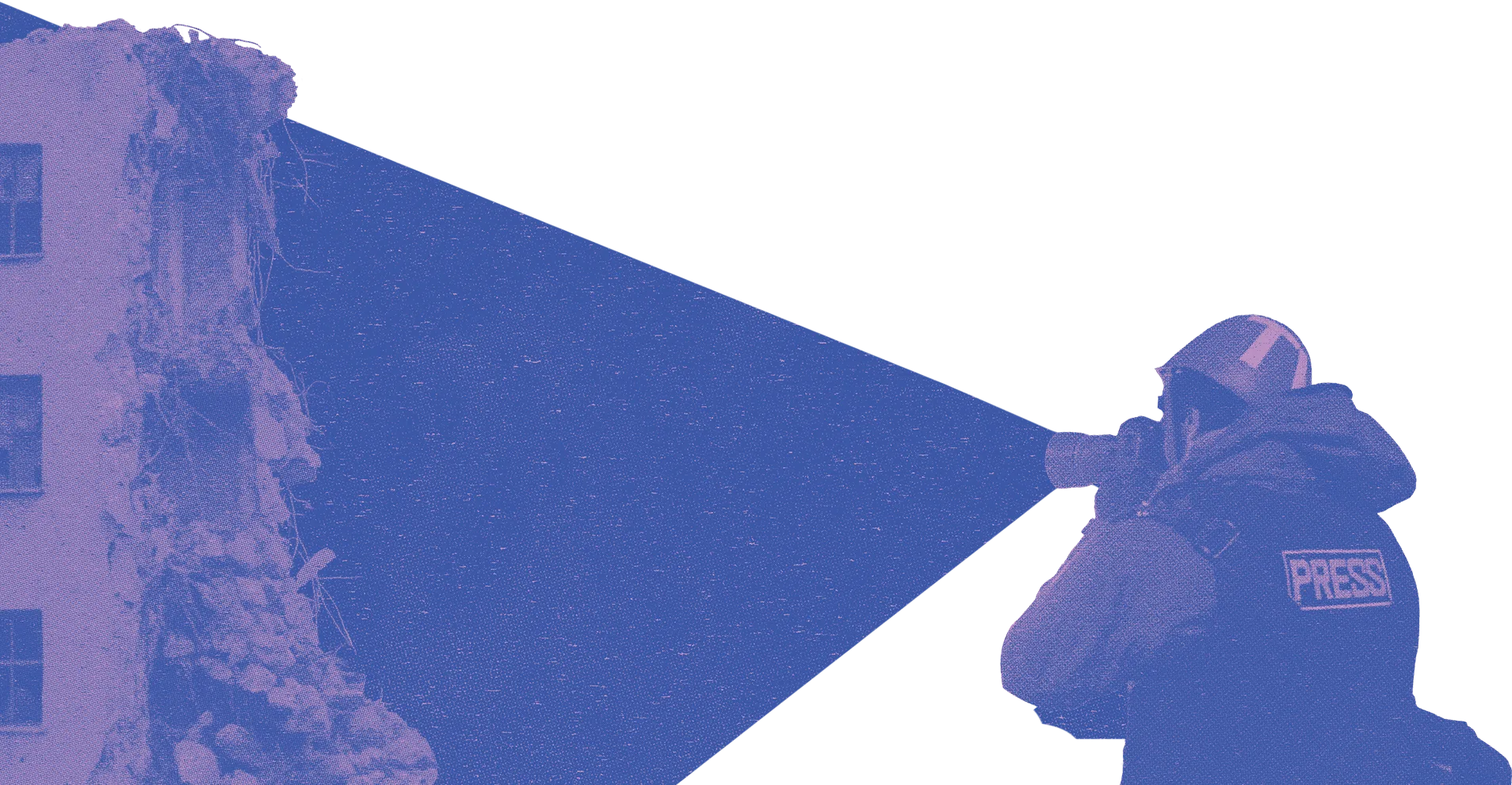
One untimely published frame or sentence within a news item can cost someone their life, disrupt a military operation, or act as evidence. Military journalism is one of the most important and, simultaneously, dangerous professions in the world. These people act as the eyes and ears of the world, where chaos reigns, to provide society with objective information. However, this duty is always situated between physical and psychological survival, which places a broader range of tasks on media workers that go far beyond the usual formulation of a report.
Journalism is one of those professions in which ethics play a key role. It is characterised by a high level of social responsibility, since the work influences public opinion, and the main focus of their material is often the individual. The main goal of journalistic ethics is to ensure the objective and comprehensive distribution of information. It establishes rules of professional conduct that help journalists act in accordance with public interest, maintain trust, and resolve ethical conflicts that may arise. It is also important to note that ethical norms should shape responsibility towards the public and influence the internal convictions and moral principles of each journalist (Ivanov 2006, 16–21). Thus, in general, ethics should cultivate in journalists a high level of self-awareness, an understanding of the importance of their work, and the impact it has on society.
PROFESSIONAL STANDARDS IN CONFLICT ZONES
Most states issue documents that set out standards of ethical conduct for journalists. However, the basis of journalistic regulation does not derive from legal norms, but from professional and ethical self-regulation through recommendatory documents. Among them is the Declaration of Principles on the Conduct of Journalists, adopted at the Second World Congress of the International Federation of Journalists in 1954 (International Federation of Journalists (IFJ) 1954), which serves as an international code for members of trade unions in more than 140 countries, including Ukraine (the National Union of Journalists of Ukraine and the Independent Media Trade Union of Ukraine are members of the International Federation of Journalists).
At the same time, ethical principles enshrined in international agreements acquire concrete meaning only within national media systems, where they are adapted to the political, legal, and social realities of each country. It is therefore important to consider how these norms function at the state level, particularly under conditions that radically change the usual model of journalistic activity. In Ukraine, journalistic ethical codes do not have legal force and function as instruments of professional self-regulation. Ethical codes are complicated during wartime, as conflict may arise between professional duty and national interest. Amidst the conditions of war, rigid adherence to journalistic standards can pose a threat to human life or national security, which, in turn, calls into question the very possibility of carrying out journalistic activity in such conditions, since even a minor disclosure of operational information may be used by the enemy. The state may apply military censorship to mitigate these threats, significantly limiting the professional work of journalists. Therefore, when covering events related to hostilities, journalists must adhere to particular standards.
Under these conditions, abstract ethical principles become increasingly practical and call for clear, concrete guidelines. That is why, during the first month of the full-scale war in Ukraine, several documents appeared with practical recommendations regarding journalistic activity. Order of the Commander-in-Chief of the Armed Forces of Ukraine No.73 of March 3, 2022, regulates interaction between the Armed Forces and the media under martial law (Ministry of Defence of Ukraine 2022). It defines what information must not be disseminated to prevent the leaking of restricted-access data and ensure the security of Ukraine. Some of these include:
1. Names, composition, and locations of military units
2. Data on combat plans, losses, and movements of equipment
3. Results of operations, if not officially published
4. Photos and videos depicting equipment, armament, and air defence positions
5. Data about special units and intelligence (Ministry of Defence of Ukraine 2022)
The order contains separate provisions that regulate the work of journalists in the combat zone. Namely, a journalist has the right to:
1. Receive, store, use, and disseminate general information about the preparation and actions of defence forces
2. Cover the results of completed operations only with the command's approval (Ministry of Defence of Ukraine 2022).
Additionally, the duties of a media representative are as follows:
1. Acknowledge that they do not have the right to disclose information that constitutes state or official secrets
2. To move within the combat zone only by an agreed route and for an agreed period
3. To carry a body armour vest, helmet, first aid kit, and know how to provide first aid
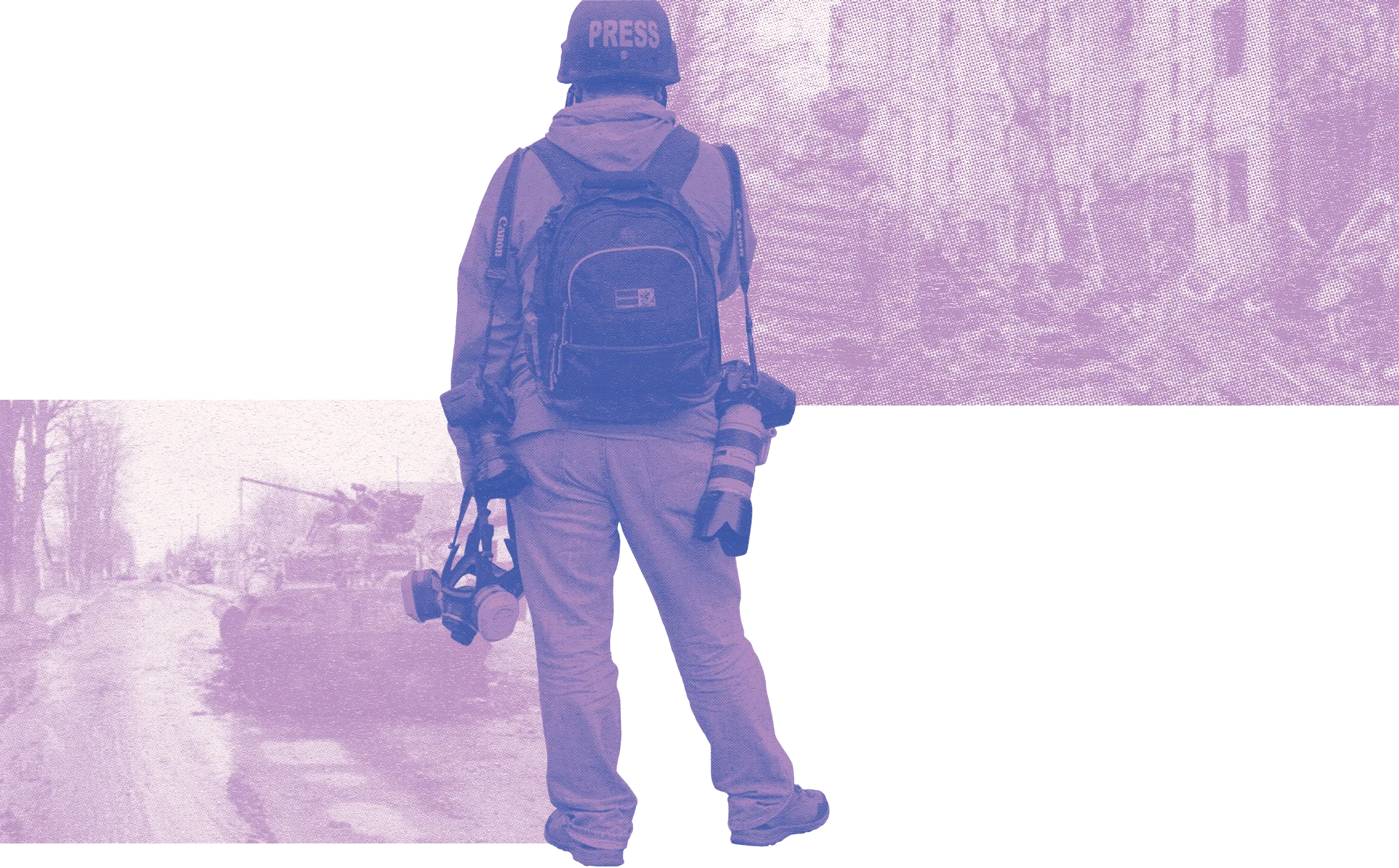
4. To wear identification markings "PRESS"
5. To not perform actions incompatible with civilian status
6. To submit materials for verification and remove information prohibited from disclosure upon request
7. Acknowledge that the Armed Forces are not responsible for the safety or insurance of media representatives (Ministry of Defence of Ukraine 2022).
It is also worth emphasising that the anonymity of combatants and witnesses within the conflict zone is of critical importance, since the disclosure of identity may pose a threat. Identification of a person by first and last name is permissible only in the absence of safety concerns. Thus, the priority for a journalist in conditions of armed conflict is personal safety and the preservation of life.
THREAT AND PREPARATION
The threat faced by journalists in combat zones goes far beyond moral responsibility and professional limitations. The reality of war turns every careless decision and violation of safety rules into a potentially unavoidable risk. According to the Institute of Mass Information, Russia committed 870 crimes against journalists and media workers in Ukraine from February 24, 2022, to October 2025, including killings, abductions, shelling, holding in captivity, damage to newsrooms as a result of military actions, cyberattacks, blocking of the information space, and attempts to impose propaganda (Sluga Narodu 2025). The total number of media workers killed up until November 2025 amounts to 118 journalists, 15 of whom were killed while performing their professional duties (ibid.). In addition, about 29 Ukrainian media workers are currently held in Russian captivity (ibid.).
Therefore, providing military journalists with appropriate training is necessary to ensure safety and reduce the risk for other individuals in combat zones. Although documents regulating journalistic activity under martial law do not provide security guarantees, there are certain actions journalists can take to enhance their safety.
PHYSICAL PREPARATION
In conflict zones, journalists face the risk of physical violence; therefore, in emergencies, it is necessary to stop work in time and move to a safe place. Military journalists must always be provided with protective equipment and must understand the region that they are in to develop an evacuation plan in advance. It is advisable to undergo first aid training and learn to navigate using maps. Reporters are at especially high risk of attack because combat conditions make it very difficult to hold perpetrators accountable, hindering the recording, collection, and documentation of evidence and the identification of those responsible. Local networks of journalists, local communities, and security experts help reduce danger in such situations (Reporters Without Borders (RSF) 2015). In addition, many international organisations provide journalists with essential support and equipment (personal protective equipment, satellite phones, secure communication devices, specialized GPS trackers), including Reporters Without Borders, Free Press Unlimited, and others.
It should be noted that despite the existence of certain educational initiatives, such as the Network for Border Crossing Journalism programs (Network for Border Crossing Journalism 2025), as well as UNESCO (2023) and IWPR training in security journalism, Ukraine still lacks a systematic, structured, and institutionally guaranteed model of journalistic training for work in combat conditions.
DIGITAL SECURITY
When working in conditions of armed conflict, military journalists need to have a clear plan for how to maintain communication with the outside world. It is essential to have several phones or satellite communication devices and to ensure that all devices have additional power sources (Committee to Protect Journalists 2012). It is also important to have a trusted person outside the combat zone who is familiar with the area where the journalist is located and monitors the situation (ibid.). Only encrypted messengers should be used, and data storage should be carried out in a secure environment using up-to-date cryptographic protection tools and access control (ibid.). Backup copies must be created, as equipment can be lost (ibid.). It is imperative to store sensitive data, such as source contacts or other information that could endanger others, in secure locations (ibid.). Journalists should prepare alternative means of communication in case of internet or mobile network shutdowns to restore contact with the editorial office more quickly and determine further steps in an emergency (ibid.). All aspects of work during war are dangerous, so the primary task is to anticipate and, therefore, mitigate risk. Through preparation, analysis of potential threats, and the ability for quick decision-making when critical, journalists can ensure their own safety and increase effectiveness in uncertain conditions.
PSYCHOLOGICAL IMPACT
Even with proper physical and digital preparation, journalists do not remain fully protected from the consequences of war. Beyond physical threats lie psychological consequences: fear, sadness, guilt, nightmares, and anxiety, reflecting a wide range of work-related mental health issues experienced in combat zones (Feinstein 2004). Journalists, unlike police officers or military personnel, do not undergo systematic training to respond to violence. This leads to heightened vulnerability to the psychological impact of professional activity in conflict zones. Traumatic events can lead to clinically defined conditions, the most common of which is post-traumatic stress disorder (PTSD) (ibid.). PTSD is often accompanied by depression or substance abuse. Studies in Iraq have shown no statistically significant difference in PTSD and depression levels between journalists embedded within the military and those working independently, as both groups were frequently exposed to dangerous situations (ibid.). While many journalists demonstrate resilience in the face of such challenges, a notable proportion experience significant psychological strain or burnout, highlighting the occupational risks inherent to reporting in conflict zones.
The duration, intensity, and nature of armed conflict directly affect the psycho-emotional state of journalists. In this context, the psychological consequences of the activity of media workers during the full-scale war in Ukraine are marked. The 2402 Foundation published a comprehensive study on mental health and resilience among Ukrainian media workers (Daily Humanity 2025). The most common reactions to professional workload among journalists are stress, anxiety, and burnout, indicating the intense pressure experienced by media workers in their daily work (ibid.). This may be related to on-site safety as well as information overload, deadlines, and audience pressure (ibid.). In addition, depression, fear, anger, and feelings of guilt are quite common problems associated with covering complex topics, indicating chronic stress and burnout (ibid.).
It is appropriate to note that half of journalists do not sufficiently trust their newsroom managers to discuss their mental health (Daily Humanity 2025). In cases where support does exist, it is mostly provided irregularly and without a comprehensive approach. Overall, more than a third of journalists do not feel safe in their newsrooms, and support from management often depends on personal willingness rather than official policy (ibid.). The absence of appropriate procedures and unequal access to assistance indicates the importance of implementing unified comprehensive measures, such as formal support procedures and training managers to work with emotional stress and emotionally exhausted employees. Despite the growing interest of the journalistic community in the topic of emotional vulnerability, some journalists still do not seek support. This indicates many systemic problems — the topic of mental health remains taboo, and access to appropriate assistance is limited by financial factors, lack of time, and insufficient awareness (ibid.).
CONCLUSIONS
In the current context, it is necessary to prepare journalists to work with violent material, as well as for media organisations to develop effective support mechanisms. To prepare military journalists, it is advisable to introduce more mandatory training programmes, namely, training in psychological resilience and in conditions close to combat, regular consultations with psychologists, rehabilitation measures, and peer support programmes.
Ethical, security, and psychological aspects determine the quality and safety of military journalism. Adherence to ethical norms is complicated by martial law but remains critically important to prevent harm to the military and the state. Journalists must also undergo special training and have support, as they constantly encounter traumatic events. Therefore, the combination of ethical standards, security requirements, and psychological resilience is one of the main conditions for the professional activity of military correspondents.
BIBLIOGRAPHY
Committee to Protect Journalists (CPJ). 2012. Journalist Security Guide: Reporting Safely in a Crisis. New York: Committee to Protect Journalists. https://cpj.org/wp-content/uploads/2020/05/guide.pdf
Daily Humanity Team. 2025. Mental Health and Resilience among Journalists. Report. Authors: Olha Khan, Kateryna Serhatskova, and Larysa Kalyk.
Feinstein, Anthony. 2004. "The Psychological Hazards of War Journalism." Nieman Reports. Accessed January 9, 2026. https://niemanreports.org/app/uploads/2024/03/04summer.pdf
International Federation of Journalists (IFJ). 1954. IFJ Declaration of Principles on the Conduct of Journalists. Accessed January 9, 2026. https://research.tuni.fi/ethicnet/country/ifj-declaration-of-principles-on-the-conduct-of-journalists/
Ivanov, V. F. 2006. Journalist Ethics: Lecture Course. Kyiv: Vyshcha Shkola.
Ministry of Defence of Ukraine. 2022. Order of the Commander-in-Chief of the Armed Forces of Ukraine No. 73, March 3, 2022 (as amended). Accessed January 9, 2026. https://mod.gov.ua/diyalnist/normativno-pravova-baza/nakaz-golovnokomanduvacha-zsu-vid-03-03-2022-roku-73-zi-zminami
Network for Border Crossing Journalism. 2025. "Media Camp on Frontline Reporting Takes Place in Ukraine." Accessed January 9, 2026. https://n-ost.org/news/media-camp-on-frontline-reporting-takes-place-in-ukraine
Reporters Without Borders (RSF). 2015. Safety Guide for Journalists: A Handbook for Reporters in High-Risk Environments. Paris: Reporters Without Borders.
Sluga Narodu (Servant of the People). 2025. "Russia Must Be Held Accountable for Crimes Against Ukrainian Journalists — the Verkhovna Rada Addressed the World." Accessed January 9, 2026. https://sluga-narodu.com/rosiia-maie-vidpovisty-za-zlochyny-proty-ukrainskykh-zhurnalistiv-verkhovna-rada-zvernulas-do-svitu/
UNESCO and Institute for War & Peace Reporting (IWPR). 2023. "UNESCO and IWPR Train Ukrainian Journalists in Conflict Reporting." Accessed January 9, 2026. https://www.unesco.org/en/articles/unesco-and-iwpr-train-ukrainian-journalists-conflict-reporting
Images used: Mstyslav Chernov/Unframe/http://www.unframe.com/ on Wikipedia Commons, CC BY-SA 3.0, https://creativecommons.org/licenses/by-sa/3.0/deed.en, 100 OMBr ZSU on Wikipedia Commons, CC BY 4.0, https://creativecommons.org/licenses/by/4.0/deed.en, BO «Свобода» on Wikipedia Commons, CC BY 3.0, https://creativecommons.org/licenses/by/3.0/deed.en