RECLAIMING HISTORY
DANIIL MALITSKYY
A CONTESTED PAST
Odesa is one of the largest cities in Ukraine and the country's most significant port, a city whose cosmopolitan identity has long been a source of cultural pride. Yet, in recent years, it has become a site of political contestation — specifically, over its historical character and cultural allegiances. Since the full-scale Russian invasion of 2022, efforts to reshape the city's public identity have intensified: statues of Russian imperial figures have been removed, street names have been changed, and cultural institutions have been renamed. These actions have sparked debate within Ukraine and abroad, with some arguing that the city's "Russian character" is being erased, and others insisting that what is being dismantled is a myth.
Yet, the city's past is more complex than either side of this debate tends to acknowledge. Odesa was a city built by empires, populated through state incentives, and made wealthy through the international grain trade. Its cosmopolitan identity was real, but so was its entanglement with Russian imperial ambition. This paper examines Odesa's founding and early development between 1794 and 1859, focusing on three questions: Who built it? Who came to live in it? And who made it rich?
Focusing on the period between 1794 and 1859 allows for an examination of the city's formative decades, before later waves of industrialisation and mass migration further altered its demographic and economic character. During this period, the city was constructed primarily by foreign architects and engineers, settled through targeted incentive programs, and made economically significant through the export of grain produced overwhelmingly by Ukrainian-speaking peasants in the surrounding steppe regions. These findings suggest that Odesa's early history complicates any simple narrative of Russian cultural dominance.

CONSTRUCTION: FOREIGN MINDS AND IMPORTED VISIONS
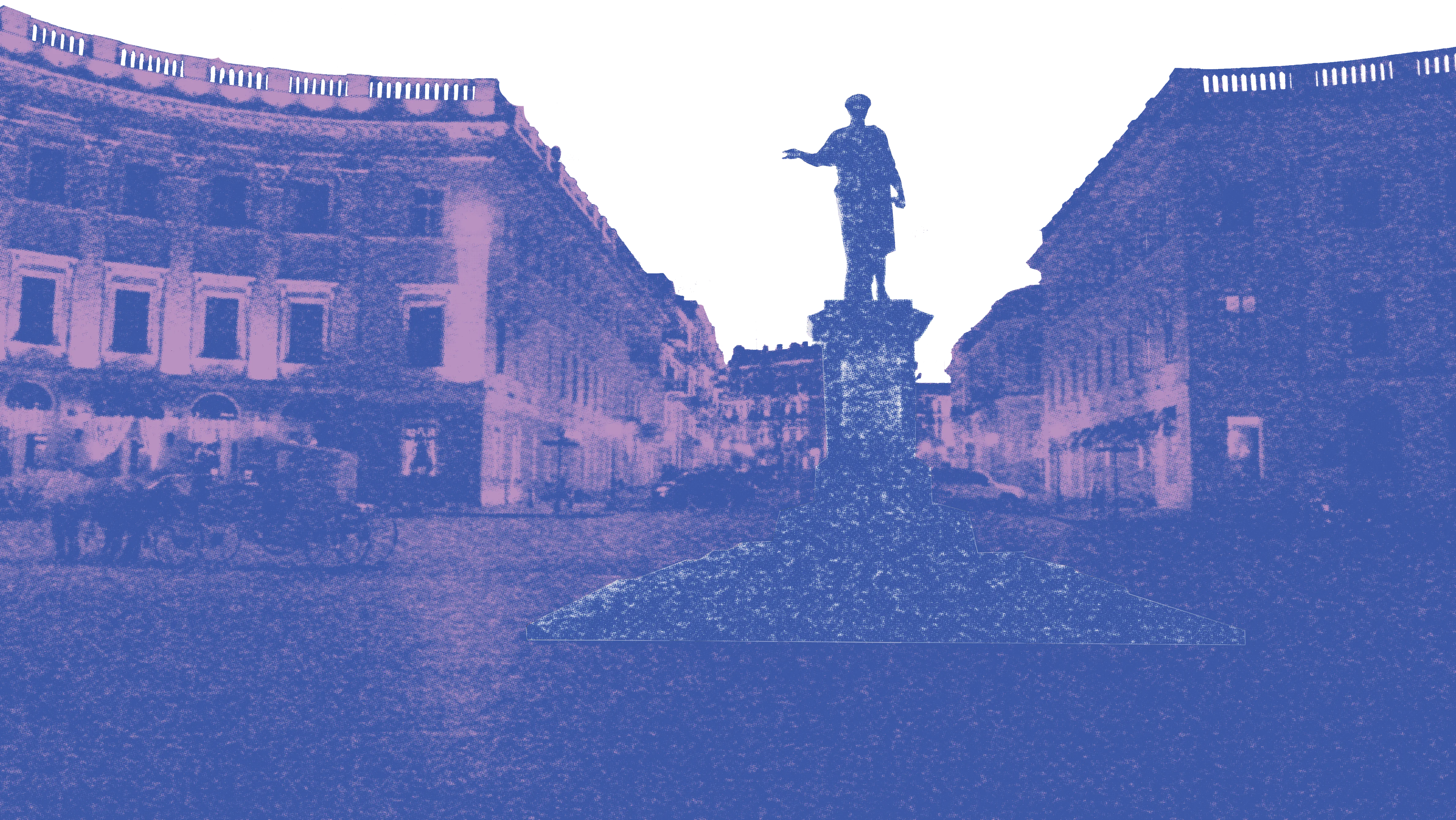
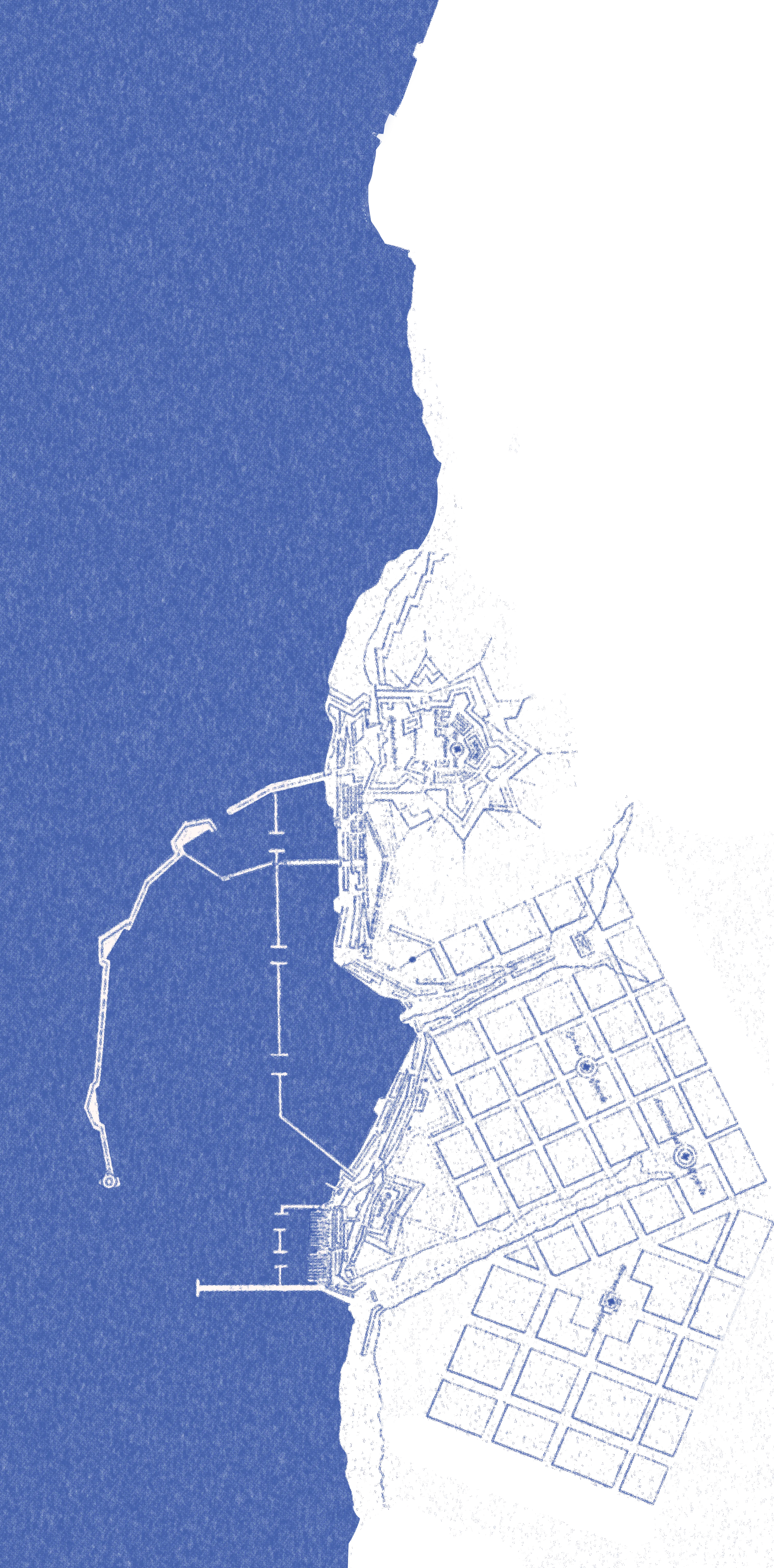
Most of Odesa's early planning and construction was directed by architects and engineers who were not Russian and who had not trained within any Russian professional tradition. The city's first general plan was drafted in 1794 by Franz de Wollant, a Dutch-born military engineer working in Russian imperial service. A revised plan was developed in 1803 by a team that included Grigoire, a French architect, and Thomas de Thomon, a Swiss-French architect who would later design St. Petersburg's Stock Exchange. The most consequential figure in the city's early urbanisation was Francesco Boffo, a Genovese-born architect who served as the city's chief architect from 1822 to 1858 and was responsible for many of Odesa's most recognisable public buildings, including the Vorontsov Palace, the City Magistrate building, and the design of the famous Potemkin Stairs.
These ambitions far exceeded local capacities. The steppe climate, the absence of established building traditions, the scarcity of skilled labour, and the distance from major stone quarries created conditions that made construction extremely difficult and expensive. A particularly revealing example is the Odesa quarantine — a facility intended to screen migrants and goods entering the city — which took decades to complete because of a chronic shortage of qualified masons and building materials. The city's infrastructure, including its water supply, sewage systems, and port facilities, was similarly delayed and poorly maintained throughout the first half of the nineteenth century.
Despite these conditions, the city expanded rapidly. Navone's research on Ticino architects in Odesa documents at least sixty-three architects and engineers from the Swiss canton of Ticino who worked in the city between 1800 and 1870. Many of these craftsmen arrived without any knowledge of Russian and completed their careers without ever acquiring fluency in the language. They brought with them building traditions, aesthetic sensibilities, and professional networks rooted in Italian and Central European practice, not in Russian imperial culture.
By 1859, the city had undergone significant physical transformation. What had begun as a set of Ottoman fortifications on an exposed steppe plateau had become a substantial port city with monumental public buildings, a functioning commercial district, and a recognisable urban character. This character, however, was shaped primarily by Western European design traditions, not by any distinctively Russian architectural vocabulary.
POPULATION: INCENTIVES FLOW, PEOPLE FOLLOW
Following a series of successful military campaigns against the Ottoman Empire in the late eighteenth century, the Russian imperial government acquired control over the northern Black Sea littoral. This territory, referred to in imperial documents as Novorossiya, presented the state with a significant challenge: it was vast, strategically important, and almost entirely lacking in settled population. To address this, the government devised an ambitious program of incentivised migration. The first major imperial decree encouraging settlement of the region was issued in 1751, and it was followed by numerous additional decrees throughout the reign of Catherine II and her successors. These decrees offered prospective settlers a range of benefits, including tax exemptions lasting from ten to thirty years, exemption from military service, grants of land, and freedom of religious practice.
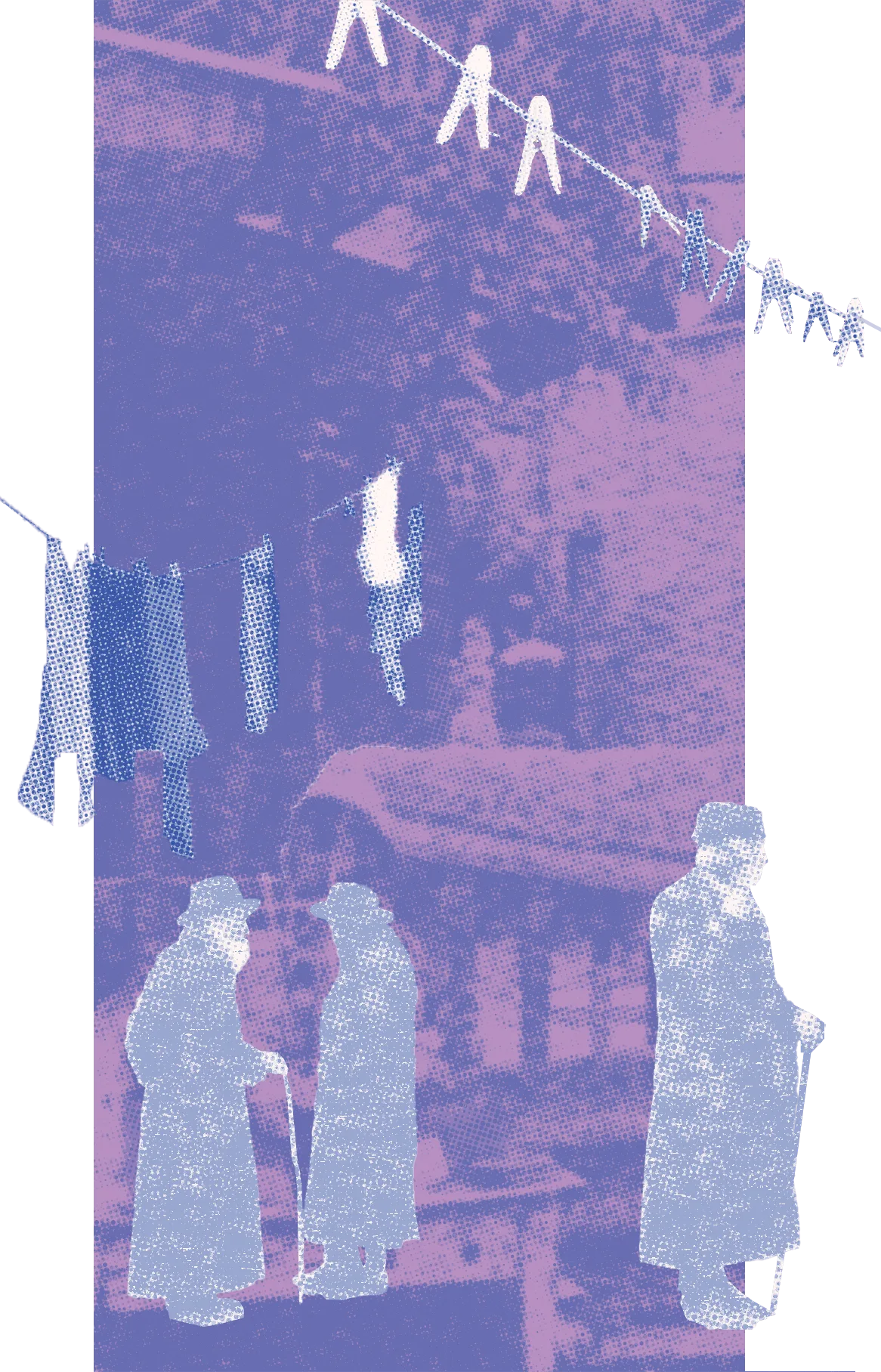
At the turn of the nineteenth century, Odesa's population was ethnically diverse in ways that reflected both the city's commercial role and the specific communities targeted by imperial recruitment efforts. Greeks were among the earliest significant group: many had settled in Odesa's predecessor settlement at Khadzhibey before the Russian conquest, and their commercial networks, particularly in the grain trade, made them economically indispensable. Jews constituted another large and economically active community; despite restrictions on Jewish settlement in most of the empire, Odesa fell within the Pale of Settlement, and Jewish merchants, artisans, and brokers played a significant role in the city's commerce from early in its history. Italians — particularly from Genoa, Livorno, and the Duchy of Parma — formed a visible and prosperous mercantile community. Germans, Armenians, Bulgarians, and Albanians were also present in significant numbers, as were Poles, Moldovans, and, of course, Ukrainians.
Official demographic statistics from the 1850s, as analysed by Herlihy and other scholars, confirm this diversity. In Herlihy's reconstruction of the city's population around 1850, Russians and Ukrainians together constituted roughly half the population, with Russians forming a smaller share than Ukrainians. The remainder was divided among Jews, Greeks, Germans, Italians, Poles, and numerous other groups. Crucially, many of those counted as "Russian" in official documents were in fact Ukrainians from the surrounding guberniya, classified under a broad imperial rubric that did not distinguish between the two groups. The conflation of Ukrainian and Russian identity in imperial statistics is itself evidence of the ideological pressures that operated within the administrative apparatus.
GROWTH: WHEN MIGRATION DRAWS THE MAP
In the first half of the nineteenth century, Odesa grew faster than almost any other city in the Russian Empire. Its population increased from approximately 9,000 in 1800 to around 100,000 by 1860. This growth was driven principally by voluntary migration, itself largely a response to the commercial opportunities generated by the grain trade and by the incentive programs the imperial government had established. The city's cosmopolitanism was, in this sense, a product of deliberate policy, not of any organic cultural evolution.
Officially incorporated into Odesa in 1820, the suburb of Moldavanka grew primarily through Jewish migration and became a dense working-class and artisan district that would later be mythologised in the stories of Isaac Babel. Peresyp, a coastal suburb adjacent to the port, became home to workers in the grain-handling industry, many of whom were seasonal migrants from the Ukrainian countryside. These patterns of spatial segregation by ethnicity and occupation are consistent with broader patterns of migrant city formation identified in the comparative urban history literature — they reflect economic function and residential clustering, not cultural homogeneity or Russian civic identity.
TRADE: GRAIN MOVES AND REVENUE ARRIVES
Merchants and entrepreneurs played a decisive role in Odesa's economic development, and the character of this merchant community reflects the city's cosmopolitan composition. Greek merchants, drawing on established diaspora networks across the Mediterranean, were among the most prominent figures in the early grain trade. Italian merchants and shipping agents connected Odesa to Adriatic and Tyrrhenian markets. Jewish brokers and financiers provided essential credit and information networks that facilitated the movement of grain from the steppe to the port. The founding of the Odesa commercial court, the establishment of a grain exchange, and the development of marine insurance all reflected the needs of this internationally oriented mercantile community.
Economic data documents the scale of this commercial activity. By the 1840s, Odesa had become one of the largest grain-exporting ports in the world. In some years, it accounted for a third or more of all Russian imperial grain exports. The grain itself was produced primarily in the Ukrainian-speaking steppe regions to the north and northwest of the city — the guberniyas of Kherson, Podolia, and Kiev — and transported to Odesa overland by Ukrainian-speaking peasant carters. The commercial profits from this trade accrued disproportionately to the city's cosmopolitan merchant class, while the productive labour was performed overwhelmingly by Ukrainian peasants who remained outside the city and largely invisible in its civic and cultural life.
The true history of Odesa's formation thus reveals a city that was built by Western Europeans, settled by incentivised migrants from across the continent and the Mediterranean world, and made economically significant by the labour of Ukrainian-speaking peasants. The city's cultural richness was real, but it was a richness born of diversity and commercial necessity, not of Russian civilizational projection.
Odesa's success thus grew not from Russianness but from the intersection of trade incentives, cosmopolitan migration, and Ukrainian agricultural labour — a foundation that modern attempts to claim the city as essentially Russian systematically ignore.

BIBLIOGRAPHY
Belge, Boris, and Katja Wezel. "Entangled Competition: Black Sea Port Cities in the Long Nineteenth Century." Slavic Review, Vol. 81, no. 3 (2025).
Dobrolubsky, Andrey, et al. "Smart port city of Odessa: the history of international trade and its importance to the region." Vitruvio, Vol. 1, no. 1 (2016).
Gervits, Maya. "Plague, Quarantine, and Urban Governance in the Black Sea Port of Odessa, 1800–1840." Planning Perspectives, Vol. 39 (2024).
Herlihy, Patricia. "Odessa: Staple Trade and Urbanization in New Russia." Jahrbücher für Geschichte Osteuropas, Vol. 21, no. 2 (1973).
Herlihy, Patricia. Odessa: A History, 1794–1914. Harvard University Press, 1986.
Herlihy, Patricia. Odessa Recollected: The Port and the People. Academic Studies Press, 2019.
Lecke, Mirja, and Efraim Sicher. Cosmopolitan Spaces in Odesa: The Literary and Artistic City. Academic Studies Press, 2023.
Montclos, Brigitte. "Les Chemins d'Odessa. Mémoires d'Odessites." Cahiers slaves, no. 14 (2016).
Navone, Nicola. "Ticino architects in Odesa and in the Black Sea region." Swiss National Museum, 2022.
Puryear, Vernon J. "Odessa: Its Rise and International Importance, 1815–50." Pacific Historical Review, Vol. 3, no. 2 (1934).
Richardson, Tanya. Kaleidoscopic Odessa: History and Place in Contemporary Ukraine. University of Toronto Press, 2008.
Sifneos, Evrydiki. Imperial Odessa: Merchants, Ottoman Jews and Greeks. Brill, 2018.

Images used: OSCE Parliamentary Assembly on Flickr, CC BY-SA 4.0, https://creativecommons.org/licenses/by-sa/4.0/deed.en, Alexbarbershop on Wikipedia Commons, CC BY-SA 4.0, https://creativecommons.org/licenses/by-sa/4.0/deed.en, Ввласенко on Wikipedia Commons, CC BY-SA 3.0, https://creativecommons.org/licenses/by-sa/3.0/deed.en, Leibniz-Institut für Ost- und Südosteuropaforschung (Regensburg) on Wikipedia Commons, CC BY-SA 4.0, https://creativecommons.org/licenses/by-sa/4.0/deed.en, Andreeva Aliona01 on Wikipedia Commons, CC BY-SA 4.0, https://creativecommons.org/licenses/by-sa/4.0/deed.en