THE TRANSFORMATION OF PUBLIC SENTIMENT IN UKRAINE AND ITS STRATEGIC IMPACT ON THE WAR WITH RUSSIA
LIUBOMYR SEMENTIUK

The Russian invasion of Ukraine in February 2022 triggered an unprecedented surge of patriotism and social cohesion, which directly contributed to the failure of Russia's planned blitzkrieg and the emergence of a protracted conflict. Understanding the behaviour of the Ukrainian state — its refusal to capitulate, its pursuit of a Euro-Atlantic orientation, and its readiness for prolonged resistance — requires more than a purely military perspective; it is essential to consider the evolution of collective perceptions, societal expectations, and the role of public opinion.
From a theoretical standpoint, this situation can be analysed through a combination of legitimacy theory, social movement theory, and neoclassical realism. Legitimacy theory explains how a government's strategic flexibility, including decisions on mobilisation and negotiations, is constrained by public approval and the need to maintain trust and credibility (Albrow and Easton 1966; Linz 1978). Social movement and framing theories highlight the influence of activists, independent media, and public discourse in shaping perceptions of war and influencing state behaviour (McAdam and Tarrow 2013; Oberschall 1978). Neoclassical realism, in turn, emphasises how asymmetric external pressures — from allies such as the United States and adversaries such as Russia — interact with internal legitimacy to determine strategic choices and the scope of operational decisions (Ripsman et al. 2016).
In this context, public opinion in Ukraine functioned simultaneously as a resource and a constraint for state decisions. The rise of pro-Ukrainian sentiment created a sociocultural environment in which maximalist rhetoric and demands for the full restoration of territorial integrity became dominant. At the same time, mobilisation policies and positions on negotiation were shaped not only by the realities of combat, but also by the imperative to preserve societal legitimacy. Activists and independent media amplified public expectations, while external political pressures, including unpredictable actions by the United States and diplomatic tensions with Donald Trump, compelled Kyiv to adjust its rhetoric and strategic options.
Thus, Ukraine provides a clear example of how public opinion, media influence, and the external diplomatic context interact to create complex dynamics that actively shape the strategic decisions and conduct of the state during wartime. This framework allows for a comprehensive understanding of the interplay between societal expectations, institutional capacity, and international constraints in determining wartime policy.
MOBILISATION
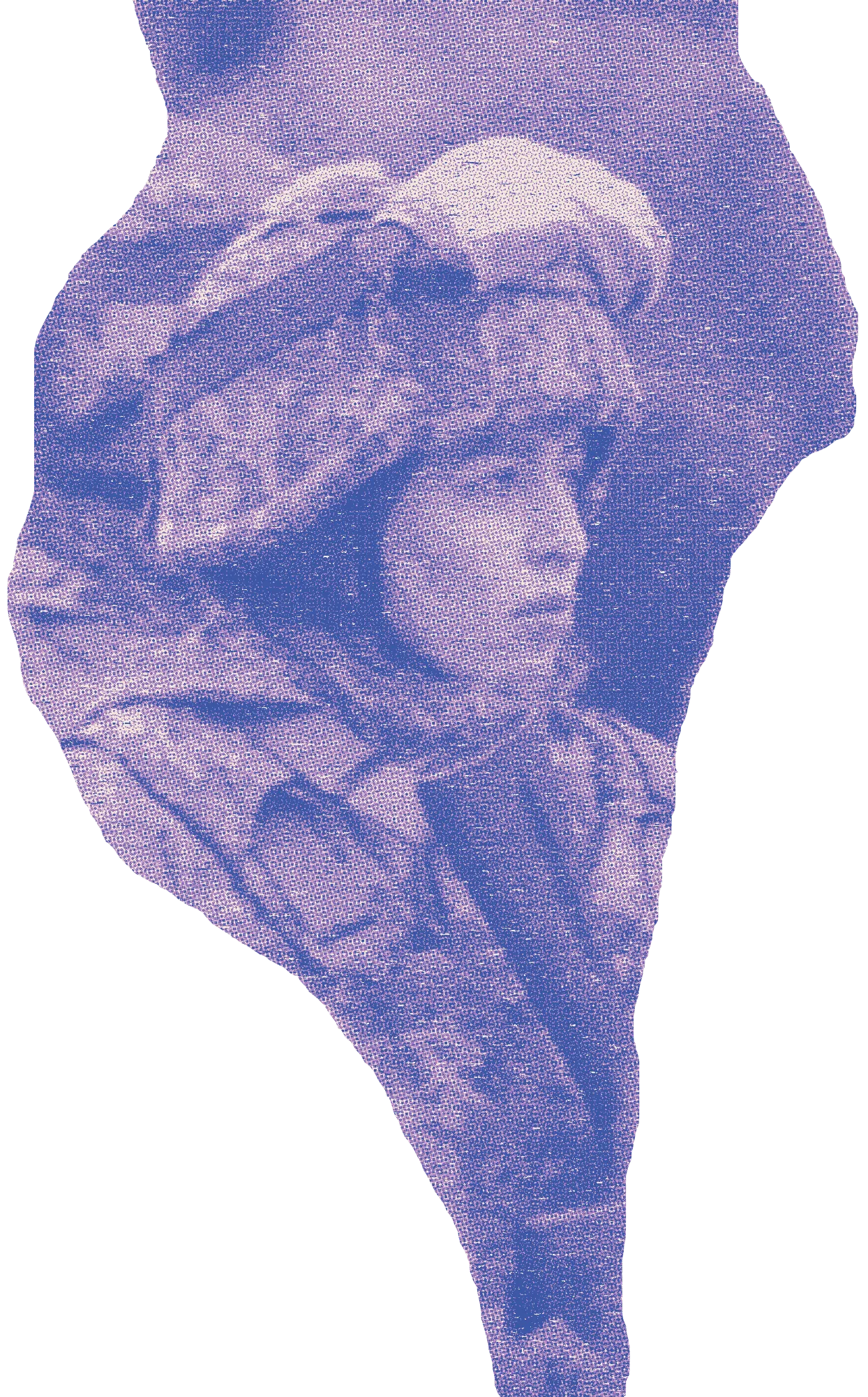
In the year before Russia's full-scale invasion, the Armed Forces of Ukraine numbered approximately 246,000 personnel (PIK 2025). This baseline is important, as it demonstrates the limited peacetime size of the armed forces before the legitimacy shock caused by the invasion. In 2022, following the declaration of martial law and general mobilisation, the number of Armed Forces personnel increased to around 700,000 — almost three times higher than during the period from 2014 to 2021 (PIK 2025). From the perspective of legitimacy theory, this rapid expansion was made possible by an exceptional level of societal consent, driven by the perception of an existential threat and the consolidation of national identity. This level of manpower remained largely stable throughout 2023.
Debates on increasing the pace of conscription intensified in December 2023, following public statements by the then Commander-in-Chief Valerii Zaluzhnyi regarding a new mobilisation law, which included the figure of 400–500 thousand additional conscripts (Radio Svoboda 2023). These statements resonated strongly within the Office of the President amid an escalating institutional conflict. Strengthening mobilisation measures was widely perceived as politically costly and socially unpopular, despite their military necessity. The Office appears to have adopted a strategy aimed at minimising political costs by shifting responsibility for unpopular decisions to the armed forces and the Ministry of Defence.
In January 2024, President Volodymyr Zelenskyy stated in an interview with Channel 4 News that there was no immediate need to mobilise 500,000 people, citing the lack of sufficiently detailed justifications:
"Personally, I don't see the need to mobilise half a million people yet. I haven't seen enough clear details today to say that we need to mobilise half a million", Zelenskyy said (Channel 4 News 2024).
This statement illustrates the gap between military assessments and political communication, where public messaging is shaped less by operational requirements than by considerations of public acceptance and political legitimacy.
On May 18, 2024, the updated Mobilisation Law No. 10449 entered into force. It introduced mandatory updates of military registration data within 60 days, lowered the draft age to 25, abolished conscription, and expanded enforcement powers for the police and military registration offices (President of Ukraine 2022). While legally necessary, these measures intensified societal tensions by expanding coercive elements of mobilisation, thereby testing the limits of wartime legitimacy.
Mobilisation remains a highly contentious issue, polarising society, undermining trust between citizens and the state, and serving as a lever of pressure both domestically and externally. According to a Kyiv International Institute of Sociology (2024) survey, approximately 54% of respondents expressed readiness to mobilise if necessary. This apparent contradiction — high abstract support for mobilisation combined with resistance to concrete enforcement mechanisms — highlights the distinction between symbolic consent and practical compliance.
At the same time, public opinion data indicate growing fatigue and increasing openness to negotiations, which further constrains the political space for coercive mobilisation policies (Razumkov Centre 2024; Ukrainska Pravda 2024). Although Ukraine retains a mobilisable reserve, the political leadership has so far perceived the situation as not enabling large-scale operational breakthroughs by Russian forces.
Persistent problems such as ineffective mobilisation practices, the absence of clear service terms, controversial military decisions, and managerial fragmentation continue to undermine defensive effectiveness. Well-known volunteers, bloggers, and military figures — including Serhiy Sternenko, Taras Chmut, Andriy Biletsky, and Yuriy Butusov — have publicly articulated these shortcomings. From the perspective of social movement theory, such actors function as informal accountability agents and frame entrepreneurs, articulating grievances and mobilising public pressure in the absence of institutionalised opposition during wartime (McAdam and Tarrow 2013; Oberschall 1978).
Overall, this dynamic illustrates how legitimacy operates not merely as passive public approval, but as an active constraint shaping the timing, framing, and institutional allocation of responsibility for mobilisation decisions.
NEGOTIATION PROCESS
The negotiation process became not only a foreign policy instrument but also a significant domestic political factor contributing to societal polarisation. Negotiations began in the early months of the invasion and initially focused on humanitarian corridors and prisoner exchanges; however, no agreement on ending the war was reached. Following the liberation of northern Ukraine and the exposure of Russian war crimes, Ukrainian public opinion shifted decisively against negotiations. Moreover, the Istanbul framework was widely perceived domestically as incompatible with prevailing notions of a just peace.
After halting Russian advances in the summer and achieving successful counteroffensives in Kherson, Kharkiv, and parts of the Donetsk region in the fall of 2022, public expectations increased substantially. Ukrainian authorities responded by adopting and amplifying maximalist rhetoric. A notable example is the presidential decree of September 30, 2022, which effectively prohibited direct negotiations with the Russian president (President of Ukraine 2022).
At the end of 2022, a survey conducted by the Kharkiv Institute for Social Research indicated that 76% of respondents opposed any compromises for peace, while 95% supported the full restoration of territorial integrity (LB.ua 2022). During this period, negotiation-oriented discourse remained marginal.
Through a state-aligned media ecosystem — including Telemarathon broadcasts, loyal bloggers, and anonymous Telegram channels — victory-centred narratives were actively promoted. Public statements by senior officials, such as Mykhailo Podolyak's comments regarding the rapid return of Crimea, reinforced these expectations (Ukrinform 2022).
Following the failure of offensive operations in the summer of 2023 and the transition of the war into a protracted stalemate, public opinion began to shift.
Surveys conducted in September–October 2023 showed that 21% of respondents supported negotiations as an immediate means of achieving peace, while 63% opposed them (Ukrainska Pravda 2024). The year 2024 marked a turning point in attitudes toward negotiations. This shift illustrates a key principle of legitimacy theory: a state's negotiating flexibility is constrained not only by military realities but also by the need to maintain domestic legitimacy and public support (Albrow and Easton 1966; Linz 1978).
According to a National Democratic Institute survey in May 2024, 57% of respondents supported entering negotiations with Russia (KIIS 2024; Razumkov Centre 2024). Nevertheless, the military and political leadership maintained a largely maximalist position, as reflected during the Global Summit on Peace in Ukraine in 2024 — a largely symbolic initiative with limited immediate political consequences. In the same period, Vladimir Putin publicly articulated his conditions for ending the war, including Ukraine's withdrawal from four regions (BBC News Russian 2024).
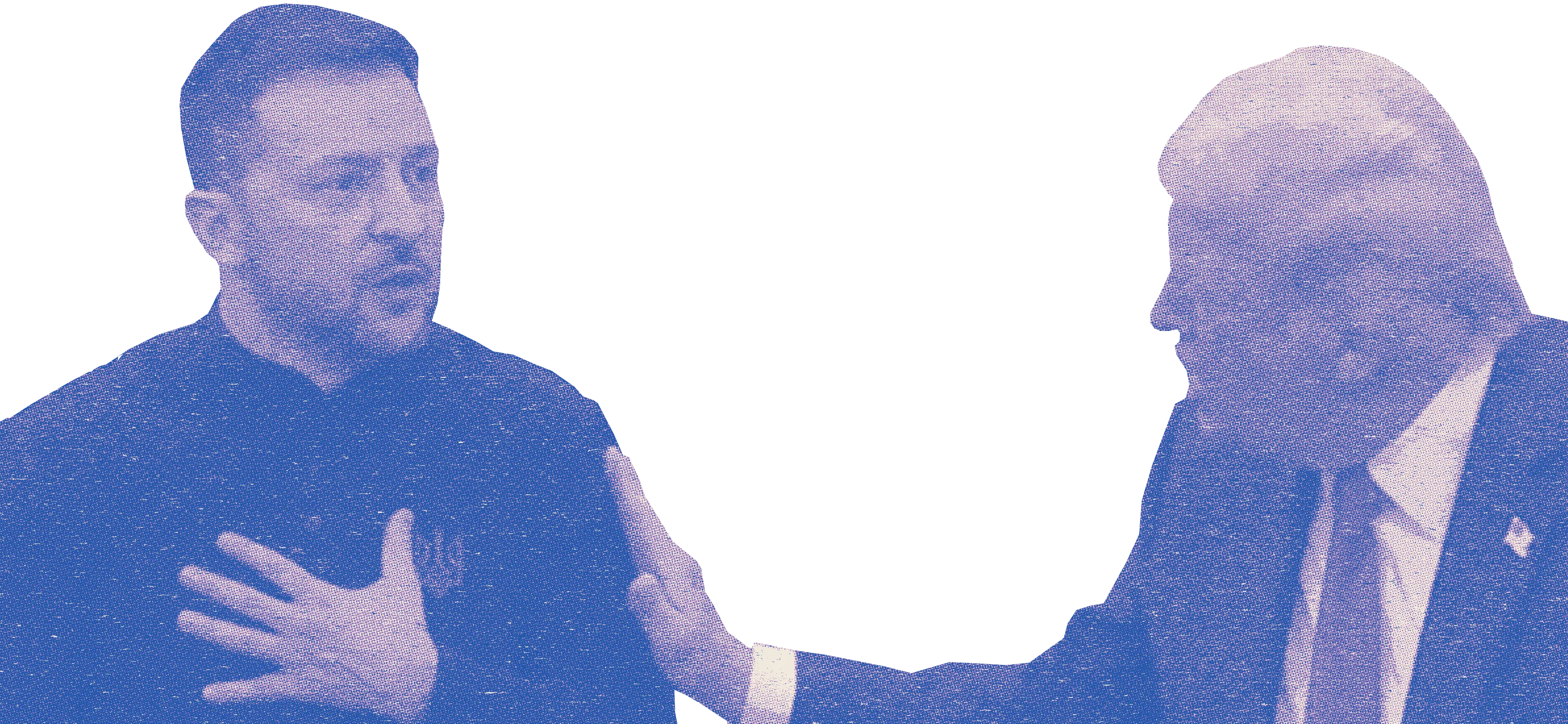
The intensification of negotiation discourse coincided with Donald Trump's election as U.S. president and the subsequent increase in American pressure on Kyiv to initiate a peace process. Given Ukraine's asymmetric dependence on U.S. support, the government gradually adjusted its rhetoric from the notion of "victory" toward the concept of a "just peace", without abandoning its core demands. Russia, however, rejected such framing and continued to insist on ultimatum-based conditions. This configuration of external pressure, Ukraine's limited internal flexibility, and Russia's rigid position demonstrates that strategic decisions regarding negotiations are shaped not only by battlefield dynamics but also by the interaction between external constraints and domestic legitimacy (Albrow and Easton 1966; Linz 1978; Ripsman et al. 2016).
GOVERNMENT SUPPORT
Support for the Ukrainian authorities has been closely associated with President Volodymyr Zelenskyy. Even before the full-scale invasion, power within the executive branch was increasingly centralised, with the President's Office exerting a dominant role in decision-making and placing pressure on opposition actors (Albrow and Easton 1966; Linz 1978). Under martial law, and with overwhelming popular backing, Zelenskyy's approval rating in May 2022 reached approximately 90%, reflecting a broad societal consensus to support the government until the end of the war (KIIS 2025). In this context, public criticism of the president was marginal and politically costly.
This high level of trust opened a political "window" for the concentration of power, manifested in the creation of military administrations directly subordinate to the President's Office, bypassing traditional civilian structures. Following the partial failure of the counteroffensive in the summer of 2023, Kyiv faced an urgent need to intensify mobilisation to maintain the front against Russia's gradual advance. Nevertheless, the authorities deliberately avoided openly taking responsibility for unpopular decisions, instead shifting the burden onto military structures.
Over time, society exhibited growing fatigue from the prolonged wartime conditions, and the absence of clear conscription rules, chaotic management, and contentious personnel decisions exacerbated public strain. Mobilisation policy thus operated within a constant tension between military necessity and the imperative to maintain public trust and governmental legitimacy. Similar dynamics were evident in negotiations with Russia and in broader challenges of public administration. Russia's creeping offensive maintained continuous pressure on both Ukrainian troops and civilians.
The inability to hold national elections during wartime further complicated the legitimacy of the government, providing grounds for both internal and external critics to challenge its authority.
Russian propaganda actively exploited these vulnerabilities, while diplomatic tensions with the United States — particularly under President Donald Trump — created both risks and opportunities for Zelenskyy to bolster his domestic standing by demonstrating resilience to external pressure.
Internal governance issues, including high-profile corruption cases involving the National Anti-Corruption Bureau (NABU), the Specialised Anti-Corruption Prosecutor's Office (SAPO), and Operation "Midas", contributed to growing public criticism of the President's Office. Zelenskyy's reliance on the personal loyalty of key officials, while consolidating decision-making power, introduced additional challenges, as certain members of his team became focal points of public distrust. Consequently, despite periods of increased approval following high-profile events, levels of public distrust remained significant, and the 61% approval rating largely reflected trust in the wartime state apparatus rather than Zelenskyy personally (KIIS 2025).
Overall, the Ukrainian case illustrates the interplay between concentrated executive authority, wartime exigencies, and public legitimacy. While centralisation enabled rapid decision-making, it also required careful management of societal expectations and trust to maintain the authority's perceived legitimacy during a protracted and high-stakes conflict (Albrow and Easton 1966; Linz 1978).
CONCLUSION
The transformation of public sentiment in Ukraine has had a decisive impact on the country's strategic choices, particularly regarding mobilisation and negotiations. Initially, the surge of patriotism and societal cohesion enabled the government to pursue maximalist military objectives, reinforcing public support for the defence effort (Albrow and Easton 1966; KIIS 2025). Over time, however, the active segment of society — though always a minority — has consistently shaped the political mainstream (Oberschall 1978; McAdam and Tarrow 2013). The authorities respond to this dynamic with policies and decisions, adjusting the pace and scope of mobilisation (PIK 2025) or framing negotiation strategies in line with perceived societal expectations.
Yet, the combination of managerial shortcomings, centralised "handmade" governance, and the desire to maintain political authority into the post-war period generates additional challenges, creating friction between operational needs on the frontlines and political responsiveness to public sentiment (Albrow and Easton 1966; Linz 1978).
Public attitudes have also influenced domestic legitimacy and Ukraine's international position. High-profile corruption scandals, the inability to hold elections during wartime, and the reliance on personal loyalty networks within the President's Office constrain decision-making and complicate public trust. These internal dynamics, combined with external pressures from allies and adversaries, shape both domestic credibility and diplomatic positioning. Ukrainian strategic decisions, whether in mobilisation, negotiation, or governance, thus illustrate that public sentiment is not merely a backdrop but an active determinant of policy (Albrow and Easton 1966; Linz 1978). At the same time, the state's reactive approach, bounded by governance limitations and political calculations, can generate new obstacles and difficulties on both domestic and international fronts (Oberschall 1978; McAdam and Tarrow 2013).
At the same time, the active part of society can provide the state with an additional source of mobilisation potential, legitimacy, and stability, but this very support can also narrow the government's room for manoeuvre, limiting strategic flexibility, especially in the negotiation process, when public expectations turn into political constraints.
BIBLIOGRAPHY
Albrow, M. C., & Easton, D. 1966. "A Systems Analysis of Political Life". British Journal of Sociology, 17(2).
BBC News Russian. 2024. "Путин выдвинул свои условия для прекращения войны в Украине накануне саммита мира в Швейцарии". https://www.bbc.com/russian/articles/c9rre20dw7lo
Channel 4 News. 2024. "Zelenskyy on Trump, Putin and How the War Could End: Full Interview". https://www.channel4.com/news/zelenskyy-on-trump-putin-and-how-the-war-could-end-full-interview
Kyiv International Institute of Sociology. 2024. "Opportunities and Challenges Facing Ukraine's Democratic Transition [National Democratic Institute survey report]". URL truncated in source.
Kyiv International Institute of Sociology. 2025. "Динаміка довіри Президенту В. Зеленському в 2019–2025 роках". https://kiis.com.ua/?lang=ukr&cat=reports&id=1542&page=1
LB.ua. 2022. "Українці вважатимуть перемогою...". https://lb.ua/society/2022/12/23/540169_ukraintsi_vvazhatimut_peremogoyu.html
Linz, J. J. 1978. The Breakdown of Democratic Regimes: Crisis, Breakdown, & Re-equilibration. Johns Hopkins University Press.
McAdam, D., and Tarrow, S. 2013. Social Movements and Elections: Toward a Broader Understanding of the Political Context of Contention. University of Minnesota Press.
Oberschall, A. 1978. Theories of Social Conflict. Annual Review of Sociology, 4.
PIK. 2025. "Як змінювалася чисельність ЗСУ за роки війни з Росією: статистика". https://pik.net.ua/2025/10/02/yak-zminyuvalasya-chyselnist-zsu-za-roky-vijny-z-rosiyeyu-statystyka/
President of Ukraine. 2022. "Decree No. 679/2022: On Ukraine's Response to the Russian Federation's Attempt to Annex the Territories of Ukraine". https://www.president.gov.ua/documents/6792022-44249
Radio Svoboda. 2023. "Залужний прокоментував дані про мобілізацію 400-500 тисяч людей". https://www.radiosvoboda.org/a/news-zaluzhnyy-mobilizatsiya/32747967.html
Ripsman, N. M., Taliaferro, J. W., & Lobell, S. E. 2016. Neoclassical Realist Theory of International Politics. Oxford University Press.
Razumkov Centre. 2024. "Підтримка громадянами вступу України до Європейського Союзу та НАТО, ставлення до іноземних держав та мирних переговорів". https://razumkov.org.ua/napriamky/...
Ukrainska Pravda. 2024. "Share of Ukrainians who want Immediate Negotiations with Russia has Risen to 35% – Poll". https://www.pravda.com.ua/eng/news/2024/10/24/7481192/
Ukrinform. 2022. "'Є там у мене улюблене місце': Подоляк обіцяє через пів року розповісти з Алті про вільний Крим". https://www.ukrinform.ua/rubric-crimea/3623657-...
Images used: Sasha Gulich on on Wikipedia Commons, CC BY-SA 4.0, https://creativecommons.org/licenses/by-sa/4.0/deed.en