HEGEMONY IN UKRAINE
A Cautionary Tale for Democracy

Amidst the flames of war and revolution, Ukrainian society has demonstrated a singular resilience to outside threats. Going back as far as 2004, civil society has been the last line of defence for democracy and accountability, counteracting the weakness of Ukraine's own governmental institutions. Moreover, society's unprecedented mobilisation in the face of the full-scale invasion also demonstrated its ability to be the ultimate guardian of the very existence of the Ukrainian state. But it is the threats from within, especially those that hide in the guise of domestic politics, which constitute the ultimate test to stability and security. This essay will demonstrate that the crisis of political hegemony is one of these issues and has been central to Ukraine's political trajectory. In addition to being a compelling case study of political hegemony, Ukraine also functions as a lens through which the widening gap between politics and lived experience can be examined.
As argued by Volodymyr Ishchenko, Ukraine's post-Soviet political instability can be understood in terms of Gramscian terminology (2024). For the purposes of this essay, Gramsci's concept of hegemony is understood as domination through 'consent'. This consent is created by what is (and is not) included in the discourses advanced by the dominant classes in the cultural and political domains — through the way in which reality is interpreted by the 'mainstream', dominant narratives (Femia, 1986: 23–29).
These discourses determine and are themselves determined by the socio-moral grammar or 'modes of thought' in the society, leading to the lasting absence of objective interests of the subaltern ('invisible') groups from the society's symbolic order. Understanding the origins and composition of the Ukrainian elites is thus indispensable for the account of the hegemony in Ukraine.
The collapse of the USSR produced a class of 'political capitalists' who converted privileged access to state power and resources into economic dominance through patronage networks, drawing on assets accumulated under state socialism (Hale, 2015; Gorbach, 2024: 43–45). To preserve this advantage, they had strong incentives to block economic liberalisation and resist competition from bigger and more efficient Western capital. This configuration generated a structural opposition between the political capitalists on one side, and the emerging middle class aligned with transnational enterprises who stood to gain from Ukraine's economic opening on the other side (Ishchenko, 2024: 307).
Therefore, the two political blocs that came to dominate Ukraine's politics from the dawn of the new millennium represented the higher strata of society. Their higher-class nature thus prevented settling of the discursive field in the 'left-right' ideological axis. Rather, Ukrainian politics were organised around the issues that got naturally articulated in the elites' efforts to keep (or make) the country suitable for their economic interests by either liberalising, modernising, Westernising, or seeking economic and cultural stability through unity with Russia (Ishchenko, 2024: 307–8). This stands in contrast to both Western democracies and some post-communist states in Central Europe, where the 'left-right' axis remains significant. From this perspective, Ukraine's political configuration appears to be a rather post-modernist case: one where the Lefortian 'markers of certainty' — or the appeal to certainty, that the 'meta-narratives' that the traditional ideologies offer in their claims to ultimate good (and which to this day, at least nominally, live on in the West) — were dissolved completely (Zicman de Barros 2024, 4; Lyotard 1984, xxiv). The post-communist disillusionment with ideology as such, as well as the structure of its elites, made Ukrainian society resilient to the moral and historical necessities of conventional ideologies, and made its politics turn around the valence issues of the economy, corruption, or quality of state services.
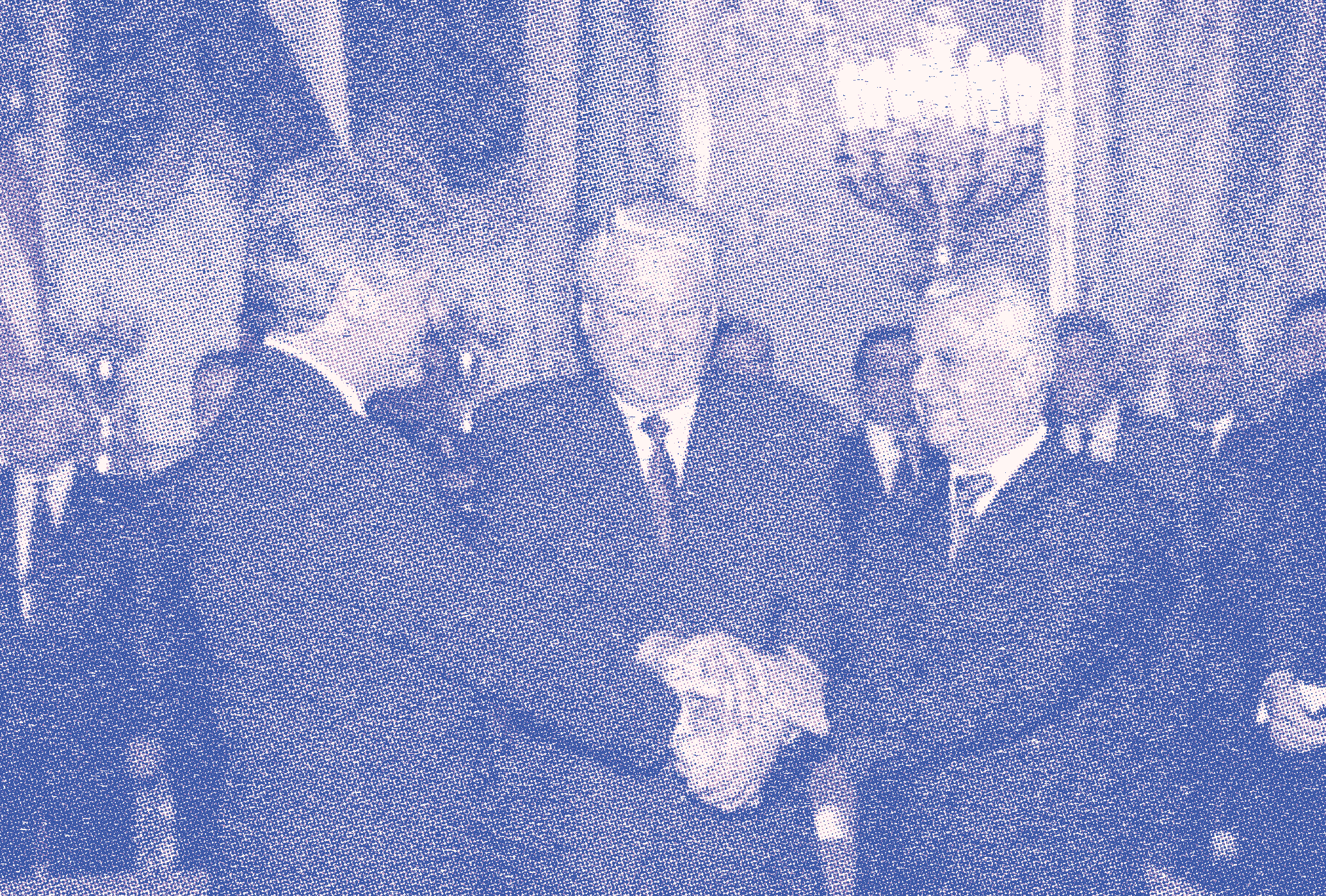
The peculiar hegemonic order of Ukrainian society thus offers a valuable lesson for an attentive observer. Because of these tendencies the grievances of Ukraine's lower class were systematically overlooked, a class whose interests lacked an 'independent ideological articulation and political representation' within the narratives of the two dominant political blocs (Ishchenko, 2024: 307). The two Ukrainian revolutions of 2004 and 2014 illustrate this well. Both protests were to a great extent products of long-term material anxiety, provoked by economic insecurity, exposure to corruption, and hindered prospects for social mobility. Disproportionately affecting the lower economic strata, these issues constituted an important underlying driver of these protest movements. However, since both movements were ignited and organised by the 'Western' block of Ukrainian politics (the one representing economic interests of the middle class, allied with what Ishchenko calls 'the transnational capital'), they gained respective anti-corruption, pro-European discursive expression, and largely overlooked the material grievances of the lower class. In this way the crisis of representation, provoked by the highly non-representative hegemonic order, deprived the protests of their potential to highlight the grievances that were fundamental to their very ignition and perpetuated the non-representative character of the Ukrainian political mainstream.
This crisis of representation, and its enduring nature, is best understood through Claude Lefort's notion of the insurgent side of democracy, or what he called 'la démocratie sauvage'. Lefort's framework complements Gramsci's concept of hegemony by situating it within moments of social rupture. In this line of thinking, significant protest movements are useful to the extent that they redraw the borders of the existing symbolical order and its conventions (what Lefort called 'the political'), allowing for inclusion of the issues previously unlit by the light of conventional discourses — usually, the very issues that provoke the extra-institutional political act of protest (Zicman de Barros, 2024: p. 8–9). In the Ukrainian context, the combination of structural factors of the post-communist political game discussed above, as well as the post-Leninist lack of ideological spectrum, produced a hegemony that pushed the interests of Ukraine's lower class to the margins of the political discourse (Ishchenko, 2024: 307–311). In the absence of a traditional ideology, a condition of epistemic injustice emerged, leaving marginalised groups without the interpretive frameworks required to understand their structural disadvantage or to articulate demands for change (Fricker, 2007). All of these factors allowed the revolutions to remain embedded within a broader, post-materialist 'middle-class' agenda, with the interests of the lower classes largely subsumed into these narratives rather than articulated explicitly despite the protests' cross-class character and membership. Both protests thus failed to ignite a truly revolutionary change when it came to life conditions for most people, but brought about a change in the political elites that kept the redistribution issue largely untouched, setting the trap that would lead both post-protest governments to devastating defeat in the subsequent elections (Ishchenko, 2021).
Ukraine is thus a peculiar example of a society where a large shake-up, which led to a landslide political change on the surface, failed to broaden the hegemonic agenda in a way that included one of the root causes of the shake-up itself. However, as I will attempt to demonstrate now, this case might not be that unique: the awareness of the functioning of Ukrainian hegemony, and its crisis of representation, has utility outside of the context of our country, for what is true about the crisis of hegemony in Ukraine is also largely true in the West.
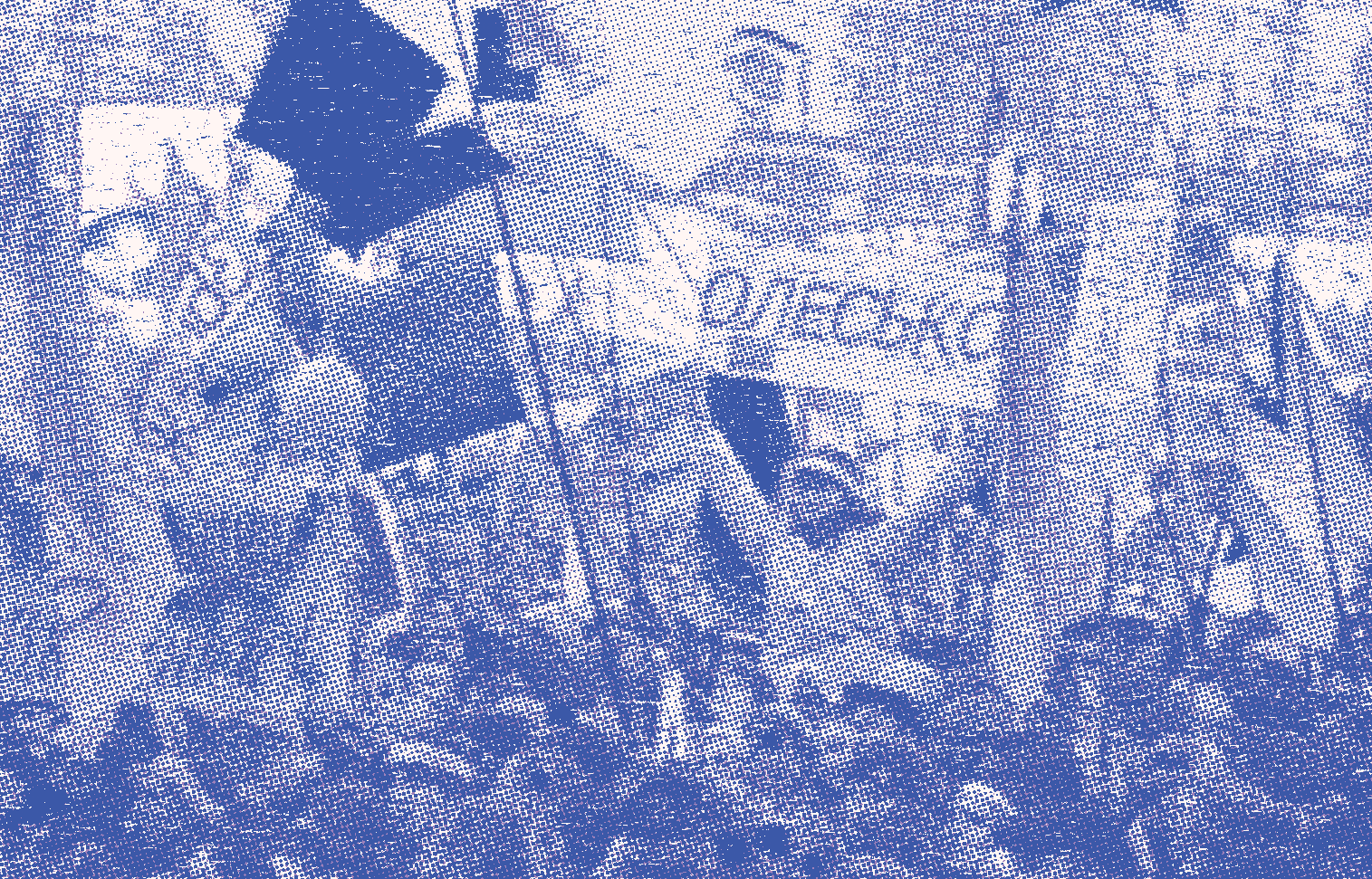
One could even argue that Ukraine has merely heralded the 'vicious cycle' that European democracies entered roughly a decade ago. The crisis of hegemony in Europe, however, has deeper roots, tracing back to the erosion of class-based politics in the second half of the 20th century.
The decades following World War II can still be described as a period of traditional ideological alignment: the less educated and poorer working classes were represented by the left, while the more educated and affluent population aligned with the right. Over time, however, various socio-economic and socio-cultural processes (the discussion of which is captivating but lies beyond the scope of this essay) gradually reversed this tendency. As a result, what Gethin, Martínez-Toledano and Piketty (2022) describe as 'multi-elite party systems' emerged, with the left voicing the post-material narratives of intellectual elites, and the right representing the material interests of economic elites.
This metamorphosis pushed the left away from representing the economic interests of the working and low-earning strata. Instead, it produced a political system in which both sides represented different factions of the elite: one primarily intellectual, the other primarily economic. Obviously, it was not due to the disappearance of the lower socio-economic class; in fact, the issues that concerned this class the most started to reemerge at the dawn of the millennium. Inequality was indeed addressed during the Trente Glorieuses, the thirty-year economic boom which followed the Second World War, for a number of reasons. However, starting from the neoliberal turn of the 1980s, through the Eurocrisis and financial crisis of 2008, it significantly intensified. As Piketty (2014) discusses in his groundbreaking Capital in the Twenty-First Century, the fall of embedded liberalism after 1980 led to a self-accelerating rise of wealth inequality; one that, according to a considerable part of economic scholarship, inevitably leads to deeper economic (and hence social) stratification if not addressed. Particularly after 2008, growing economic inequality started being noticeable 'on the ground'. The fact that some scholars started noticing and studying the 'losers of globalisation' in the West, while the 'cost of living crisis' entered the vocabulary of public discussions, shows that the neoliberal model of development did not necessarily elevate everybody in a tide-like fashion, and that many were in fact left behind.
The issue stayed on the margins due to the fact that the criticism of neoliberalism and austerity was either absent or very weak. One cause of that was the fading momentum of social-democratic and moderate leftist economic thought in the political debate of the end of the twentieth century, which further contributed to the 'subalternisation' of the lower economic stratum.

From this perspective, Margaret Thatcher famously mentioning Tony Blair as her biggest achievement is an ironic but quintessential event: it symbolised naturalisation and universalisation of neoliberalism as the convention across the political spectrum, and the creative impotence of the centre-left at offering economic alternatives. This way, the hegemony that represented intellectual and economic elites with neoliberalism as a largely undisputed convention naturally left no space for the issues of economic inequality on either side of mainstream politics.
As shown in the case of Ukraine, a hegemonic order that does not address important issues has a tendency to accumulate frustration. By the same logic, the growing trend of falling support for mainstream parties is often explained by their failure to address the issue of inequality. Unable to express itself among the mainstream political supply, the disappointment of the disadvantaged vents through the only outlet that is available — in the case of post-2008 Europe, such an outlet has been consistently offered by the far-right.
These political forces base their rhetoric on feelings of frustration and indignation, as well as perceptions of a general decline in living standards. The fact that they attract a large portion of the lower-class voters shows just how bad a job the mainstream does at representing them. The growing support of the far-right should thus primarily be seen as a matter of alienation from mainstream politics brought about by the crisis of hegemony.
The solutions offered by the far-right are, however, doomed to fail for the same reasons that those offered by their mainstream opponents currently do. Leaving the inhumane, xenophobic bigotries aside and assuming a purely pragmatic lens, the crucial thing that is absent in the rhetoric of the far-right is tackling the root causes of frustration, which is the growing wealth inequality resulting in a falling quality of life.
Quite the opposite — as for various reasons, these political forces usually adopt an even more extreme neoliberal agenda. In a way suggested by Ishchenko (2021) in his analysis of Ukraine's political economy, the 'vicious cycle' is thus propelled and perpetuated: non-addressed causes of subaltern frustrations in the narratives of both the mainstream and radical parties are likely to lead to a cycle of upheavals and power turnaround, destabilising democracies and alienating more and more people from conventional politics.
Here again, the Lefortian perspective proves useful: a shake-up that does not redraw the conventional symbolic order to include the issues necessary for its sustainability is doomed to amplify the frustration. Similar to Ukraine, what has for a long time been missing from any major political narrative in the West is a coherent, inclusive progress project that would offer a way forward while accounting for the needs of various economic and social classes, treating the material issues seriously and explicitly.
An additional but vital implication of this analysis is the unstable grounds on which geographical cleavages often rely. What frequently reaches public debate as 'Polska A vs. Polska B' or 'West vs. Ost Deutschland' should be approached with great caution, as it may be a disguised crisis of representation that becomes more visible if one accounts for all the inconsistencies of such a blunt deterministic approach (Ishchenko, 2024: 299–304). Any distribution of meanings into narratives is a result of a country's own historical path, structural particularities, and decisions of political actors.
The lesson that Ukraine, and in particular, its unity in the face of Russian threat and overwhelming grassroots resistance in its East, offers to a broader public is to be cautious of one's own society's 'conventional' mental mapping. Oftentimes, such shortcuts offer no clarity and little truth.
Ultimately, the case of Ukraine offers a valuable testimony to the functioning of Gramsci's hegemony in the political domain; it shows how destabilising its crises can be for a political system. Its self-perpetuating nature, enabled by the installation of dominant interpretative frameworks in society and politics that privilege a certain interpretative framing, provides a basis for systematic overlooking of vital societal issues.
What this essay demonstrates is how the roots of hegemonic order, and ultimately of what is included and excluded from it, are to be sought in the structure and origins of the dominant elites. The peculiar path of the Ukrainian elites and their impact on the society's modes of thinking and behaviour is but one of the factors that make Ukraine such a treasure trove for anybody interested in the topic of political hegemony.

BIBLIOGRAPHY
Fricker, M. 2007. 'Epistemic Injustice: Power and the Ethics of Knowing'. Oxford: Oxford University Press.
Femia, J.V. 1987. 'The Concept of Hegemony' in Gramsci's Political Thought: Hegemony, Consciousness, and the Revolutionary Process. Oxford: Oxford University Press.
Gethin, A., Martínez-Toledano, C. & Piketty, T. 2022. 'Brahmin Left Versus Merchant Right: Changing Political Cleavages in 21 Western Democracies, 1948–2020', The Quarterly Journal of Economics, 137(1).
Gorbach, D. 2024. 'Ukrainian Political Economy', in The Making and Unmaking of the Ukrainian Working Class: Everyday Politics and Moral Economy in a Post-Soviet City, Berghahn Books, New York.
Hale, H.E. 2015. 'Patronal Politics and the Great Power of Expectations', in Patronal Politics: Eurasian Regime Dynamics in Comparative Perspective. Problems of International Politics. Cambridge University Press.
Ishchenko, V. 2021. 'Ukraine in the Vicious Circle of the Post-Soviet Crisis of Hegemony'. LeftEast. (Accessed: December 29, 2025). https://lefteast.org/ukraine-in-the-vicious-circle-of-the-post-soviet-crisis-of-hegemony/
Ishchenko, V. 2024. 'Class or Regional Cleavage? The Russian Invasion and Ukraine's 'East/West' Divide', European Societies, 26(2).
Lyotard, J.F. (1984 [1979]), 'The Postmodern Condition: a Report on Knowledge, Theory and History of Literature', vol. 10. University of Minnesota Press.
Piketty, T. 2014. 'Capital in the Twenty-First Century: A Multidimensional Approach to the History of Capital and Social Classes', The British Journal of Sociology, 65(4).
Images used: Дніпровська районна в місті Києві державна адміністрація, CC BY 4.0 https://creativecommons.org/licenses/by/4.0/, Firo002 on Wikipedia Commons, CC BY-NC 3.0, https://creativecommons.org/licenses/by-nc/3.0/, Firo002 on Wikipedia Commons, CC BY-NC 3.0, https://creativecommons.org/licenses/by-nc/3.0/