THE CURIOUS CASE OF THE 'USEFUL' AND 'NON-USEFUL' JEW
BENYA PYATSKI
A young child walks home from school and asks his mother,
'Mum, why does everyone at school call me a "Zhid"?'
The mother replies, 'Just be patient and wait'.
Years later, the child comes home from college and asks the same question.
The mother replies, 'Just be patient and wait'.
After finishing university and obtaining a PhD, he still comes home and asks his mother the same question.
The mother replies, 'Just be patient and wait'.
Finally, one day, he wins the Nobel Prize in Science, and people start to call him a famous Russian scientist.
WHY WRITE THIS?
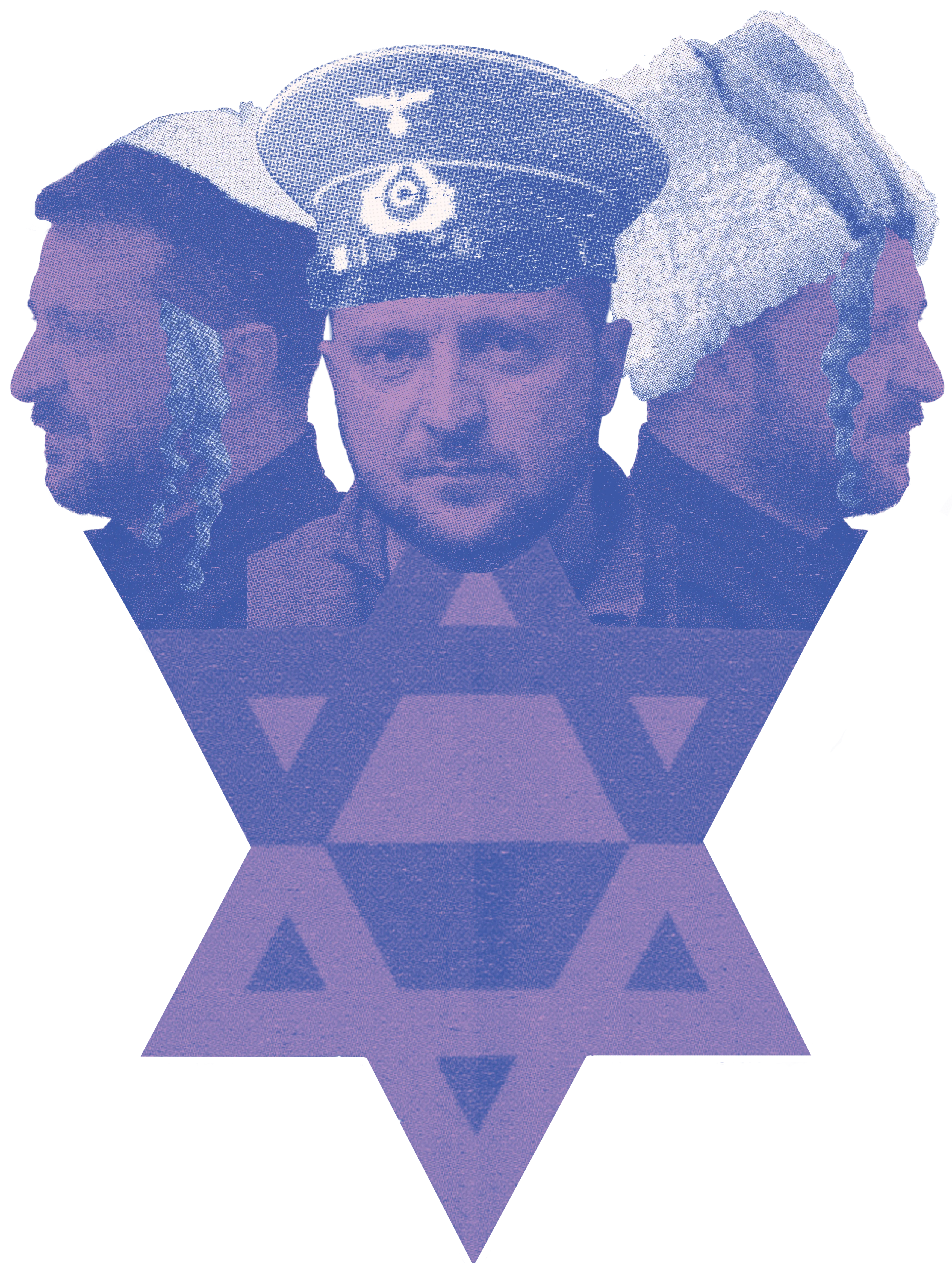
On the fifth day of Chanukah, I was very kindly given a gag gift by the Ukrainian Society of Northumbria University. What I received was something bizarre and something I had previously only encountered in an obscure Reddit post — it was a Ukrainian flag, red on black instead of blue on yellow, bearing a Jewish Star of David at its centre. The flag (without the star) is commonly associated with the Ukrainian Insurgent Army (UPA) and the Organisation of Ukrainian Nationalists (OUN); two nationalist movements operating primarily in western Ukraine from the 1920s to the 1950s that sought independence from the Soviet Union through partisan warfare. The OUN was explicitly antisemitic from its inception and carried out pogroms (organised massacres of Jewish settlements). The UPA, though not initially antisemitic, frequently redirected anti-Bolshevik, anti-Russian, and anti-Polish resentment towards Jewish populations, especially during periods of collaboration with the Nazis (Державний Архів Львівської Області, document 21; Zhukov 2007).
The flag, however, actually predates both organisations and has a longer history as a war flag of Ukraine (a role it continues to fulfil to this day) (Voloshanenko 2024). Its association with the OUN and UPA, though, has become a major target of Russian propaganda in an attempt to justify the invasion of Ukraine as a campaign of denazification. Indeed, it is not contradictory in Russian media to portray Ukraine as both Nazi-run and part of a grand Jewish conspiracy aimed at undermining Russian Orthodoxy and seizing power. So, although placing one of Judaism's core symbols on a flag associated with historically antisemitic groups is ironic in and of itself, this is only surface-level irony. The deeper irony is that this flag serves as a near-perfect visual summary of the Russian worldview toward Jews, forged through nearly three centuries of oppression, forced assimilation, and paradoxical ideology.
Even more egregiously, Russian Foreign Minister Sergei Lavrov openly stated in 2022 that 'the fact [that Zelenskyy is Jewish] does not negate the Nazi elements in Ukraine'. Lavrov went on to claim that Hitler himself had 'Jewish blood' and that 'for some time we have heard from the wise Jewish people that the biggest antisemites were Jewish' (NBC News 2022). The absurdity of saying that the architect of the Holocaust was Jewish is obvious. What is often overlooked, however, is Lavrov's deliberate phrasing. Calling the Jewish people 'wise' in the same breath was not a slip of the tongue — it reflects Russia's deeply embedded, self-serving cultural mechanism for categorising Jews into 'useful' and 'non-useful'.
'USEFUL' AND 'NON-USEFUL' JEWS
Russian culture does not simply recognise Jews as Jews. Instead, it divides them into categories: 'useful' Rossiyane and 'non-useful' Zhids. A 'useful' Jew ceases to be Jewish in the public imagination as their Russification is complete; a 'non-useful' Jew becomes a problem. Zelenskyy, as a Jew who is not useful to Russia, becomes a Zhid. He is therefore also a Nazi, and as per statements by Vladimir Putin in 2023, 'a disgrace to the Jewish people' (Meduza 2023). At the same time, because he is Ukrainian, he is a Khokhol, a derogatory Russian term for Ukrainians. Ukrainians, in turn, become Zhidovski-Khokhlovski Nazis. This perception of Ukrainians is perfectly reflected in the flag that I was given. As absurd as this may sound, this self-contradictory line of thought is seen as completely logical in the Russian worldview. So where do these constructs come from? As with most things in Eastern European Jewish history, it is complicated, violent, and old.
CONGRATULATIONS, YOU ARE NOW RUSSIAN. DO NOT RESIST.
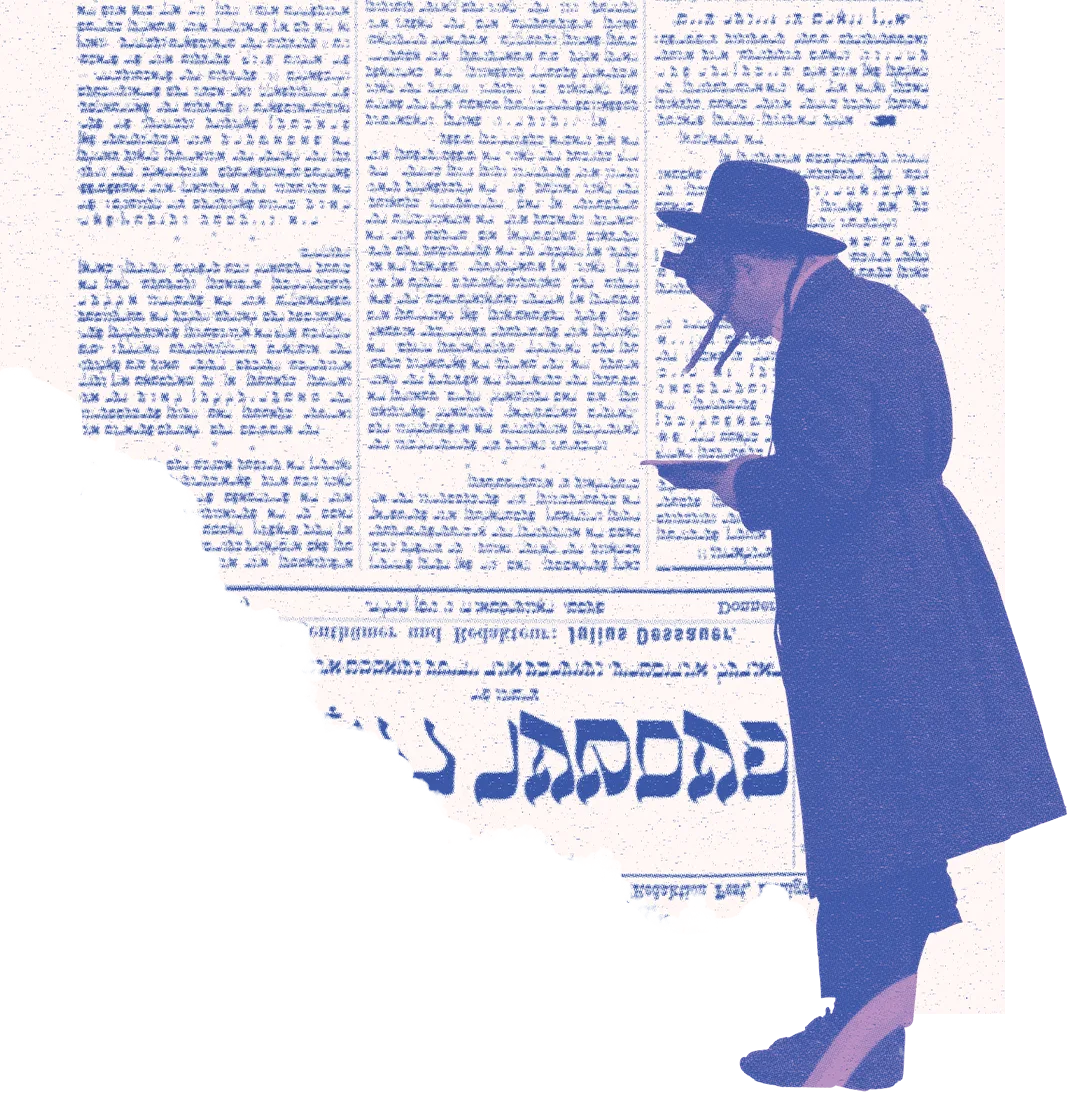
The first time a large Jewish population came under Russian imperial control was after the partitions of Poland from 1772 to 1795. With the new territory came millions of Jews who had populated it since the Middle Ages. To get them under control, the empire created the Pale of Settlement, restricting permanent Jewish residence to a defined region spanning modern-day Lithuania, Belarus, Poland, Ukraine, and Moldova (Encyclopaedia Judaica 2007). By the early nineteenth century, around 5 million Jews (about 40 per cent of the world's Jewish population) lived within the borders of the Russian Empire (Żebrowski n.d.). The Pale, however, was a harsh reality where Jews faced systematic exclusion, forced Russification, and nearly a century of pogroms. Central to this system was the categorisation of Jews into 'useful' and 'non-useful', formalised in 1851 (Encyclopaedia Judaica 2007). Initially, 'useful' Jews were wealthy merchants and individuals essential to local commerce; the rest of the Jewish population was deemed 'non-useful' and therefore posed a problem for Russian hegemony (Jewish Virtual Library n.d.). The solution to it — forced transformation.
By the order of Tsar Nicholas I, beginning in 1825, Jewish boys were forcibly conscripted into the military starting at age twelve (although a disproportionate number were younger). They were placed in cantonist military schools (specifically for underage Jews) until adulthood and then drafted for twenty-five years of service (ibid.). The objective was clear — to destroy Jewish identity and convert Jews to Russian Orthodoxy. The Tsar stated plainly: 'the purpose of the education of the Jews is to bring them nearer to the Christians and to uproot their harmful beliefs, which are influenced by the Talmud' (ibid.). To meet conscription quotas, Jewish communities were forced to police themselves; khapers (snatchers) were Jews employed to kidnap Jewish boys for the state (Petrovsky-Shtern n.d.). These Russified Jews enforced the will of the state onto other Jews, causing immense trauma, internal distrust, and long-lasting divisions within Jewish communities. Those not conscripted were expelled into shtetls (segregated villages) or agricultural colonies (Jewish Virtual Library n.d.). Jewish life was suppressed through bans on, among other aspects, traditional clothing and pe'ot (traditional Jewish sidelocks). Most Jewish soldiers who refused conversion were treated as expendable assets and sent as ill-equipped front-line infantry to be used as cannon fodder (Petrovsky-Shtern n.d.).
In the 1840s, Nicholas I expanded his policy of forced assimilation through state-run Jewish schools, funded by extortionate taxes levied on Jewish communities themselves. Jews who completed these programs received the right to live outside the Pale and pursue higher education and enjoyed a higher legal status. They were no longer Zhidy, they became Rossiyane. That status, however, was fickle. Starting in the late nineteenth century, Russia was facing political instability, military defeats, and revolution. In this tense atmosphere, antisemitism reached its climax. Jews were blamed for an imagined international conspiracy, resulting in the state-sponsored publication of The Protocols of the Elders of Zion, the banning of the Hebrew alphabet in 1915, mass expulsions from Lithuania and Courland, and a new series of severe pogroms which killed over 100,000 Jews.
Because of this oppression, Jews disproportionately joined the revolutionary movements of 1917. Initially, Bolshevik rule abolished legal antisemitism and loosened restrictions on Jewish life. These policies, however, did not last. Under Soviet leadership, the 'Jewish problem' was reframed as one of assimilation (with assimilated Jews themselves often acting as enforcers). Judaism, Hebrew, and Zionism were suppressed. Secular Yiddish culture was tolerated briefly, then dismantled. In 1919, Jewish communities were dissolved, their property confiscated. Hebrew study was prohibited, and religious institutions were shut down. Yiddish texts were forcibly rewritten in Cyrillic to sever the language's connection to Hebrew. Jews were compelled to speak Russian, adopt Russian names, and assimilate culturally. With the ascension of Stalin to power, Soviet Jews became legally marked by the pyatoye (the fifth line of the passport that identified ethnicity), and post-World War II, they were labelled 'enemies of the people', purged from common society, and sent to gulags (Correspondent 1997). Of course, exceptions were made for 'useful' Jews. Post-Stalin, those who continued Jewish life would become known as Refuseniks and were labelled 'social parasites' and were subsequently punished until the reforms of the late 1980s. Throughout this period, the categories remained; they were just more efficiently enforced.
CULTURE COMPLETES THE PICTURE
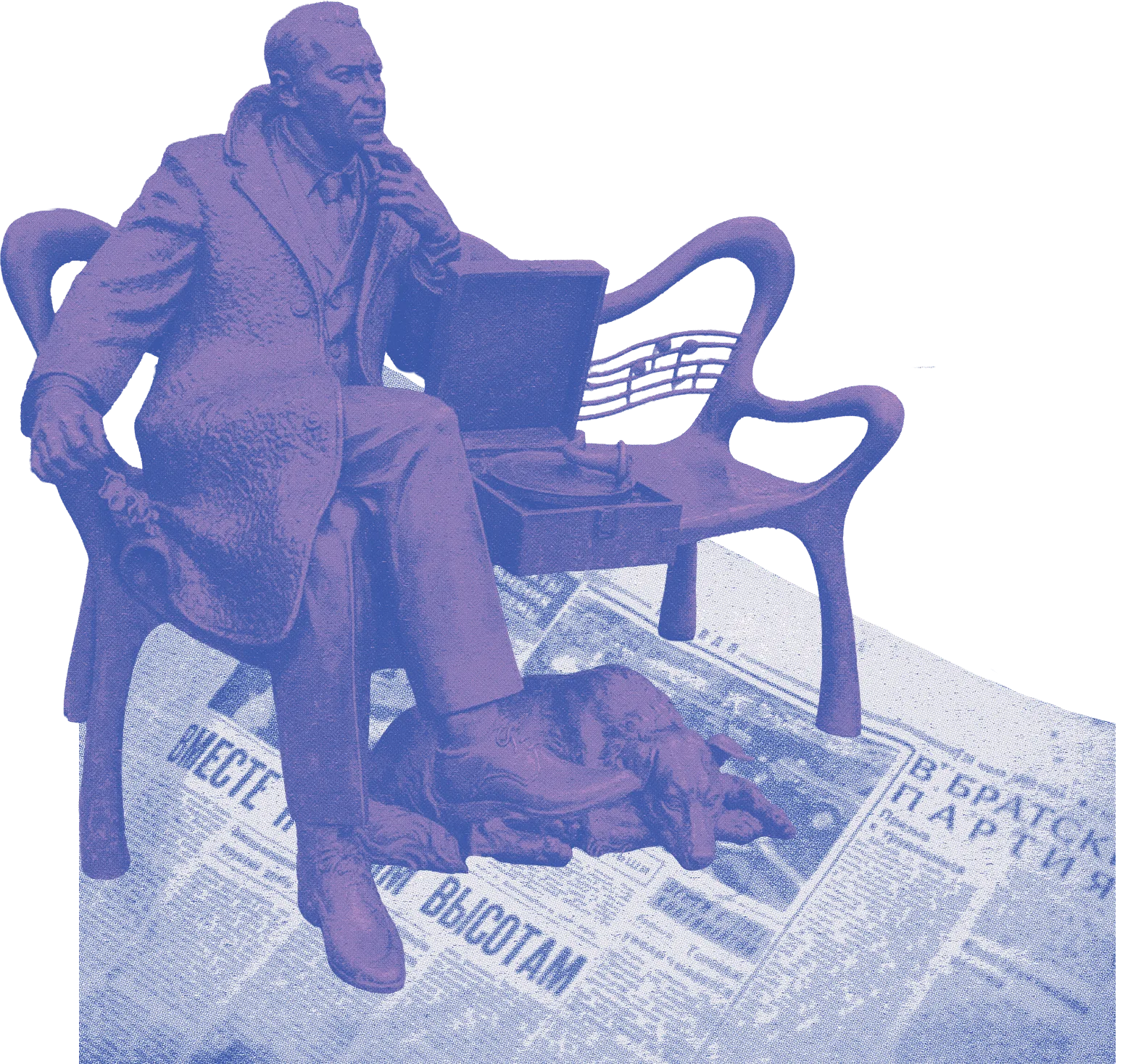
State policy alone is not responsible for these actions, however. Culture finished the job. Throughout the Soviet period, Jewish art, music, theatre, science, and literature were translated into Russian, stripped of their unique Jewish identity, and rebranded as national products. The effects of this cultural erasure are still visible to this day. As a crowdfunded source which reflects the socio-cultural attitudes of its contributors, Wikipedia serves as a perfect example: Leonid Utyosov, born Leyzer Iosifovich Weissbein and Mark Bernes, born Menakhem-Man Neukh-Shmuylov Neyman, were among the most well-known performers of the first half of the twentieth century in the Soviet Union; both were Jewish, born in Ukraine, and grew up speaking Yiddish. Yet Russian Wikipedia describes Utyosov as an 'ethnic Russian and Soviet artist', and Bernes simply as a 'Soviet artist'. Their Jewish identities disappear.
By contrast, Rabbi Menachem Mendel Schneerson — the founder of Chabad — born in Ukraine and raised speaking Yiddish, is labelled explicitly as Jewish. His father was executed, his family persecuted, and he fled the Soviet Union. He was not useful for Russian culture and hegemony, and although famous, neither Russian Wikipedia nor the Russian people consider him Russian.
Even iconic 'Russian' songs such as 'Мурка' (Murka), 'Шаланды Полные Кефали' (Barges, Full of Mullet), and 'Крутится, Вертится, Шар Голубой' (The Blue Ball Spins and Turns) were originally written in Yiddish, about Jewish life, and performed by Jewish artists like Utyosov and Bernes. The chanson genre to which these songs belong, often considered quintessentially Russian, in fact comes from the Jewish-Ukrainian culture of the late nineteenth and early twentieth centuries.
UKRAINISH
So, what does this have to do with Ukraine? The historical relationship between Ukraine and the Ashkenazi Jewish population is long, enduring, and reciprocal. Jewish culture became ingrained in Ukrainian culture just as Ukrainian space and language shaped Jewish life. A clear example is the stereotypical Odesite. Odesites are known for speaking a distinctive dialect of Russian marked by Yiddish-influenced grammar, pronunciation, and rhythm, including the famously unrolled 'r'. They are also known for a style of humour deeply associated with Jewish tradition, so much so that an entire genre of jokes revolves around an Odesite named Rabinovich (a stereotypically Jewish surname). This cultural fusion persists even within the Jewish diaspora today. When my local Rabbi, whose family left Ukraine over a century ago, learned that my family had come from Berdychiv, he exclaimed that it was good luck to meet a Jew from Berdychiv, showing a sentiment rooted in shared cultural memory rather than religion alone. Linguistically, this relationship culminated in the creation of Ukrainish, a hybrid of Ukrainian and Eastern Yiddish which became the most common dialect of Yiddish in the early 20th century and the standard for Yiddish theatre, literature, and academia (Katz n.d.).
This deep cultural integration led, in the Russian imagination, to an association between Jews and Ukrainians. Within the existing Russian framework of Rossiyane and Zhidy, Jews, whose culture had become an integral part of Ukrainian life, were recast as a corrupting force, producing Khokhols — the 'non-useful' Ukrainian counterpart to the 'non-useful' Jew. This logic surfaced explicitly for the first time following the Second World War. Soviet propaganda emphasised alleged Jewish and Zionist participation in the UPA, particularly during the early 1950s purges of Soviet Jews, when supposed links between Jewish and Ukrainian nationalism were fabricated and amplified through hoaxes and staged 'revelations' (Romerstein 2004).
PUTTING IT ALL TOGETHER
So where does that leave us? It leaves us with a Russian worldview shaped by centuries of forced assimilation, cultural extraction, and deeply embedded ideological hypocrisy. One in which Jews and Ukrainians are understood not as peoples, but as functions. Within the framework of Russkiy Mir, culture and identity are judged not by origin or truth, but by perceived usefulness. Jewish culture and Jews deemed to be 'useful' may be absorbed, renamed, and celebrated as Russian, while Jewish culture and Jews deemed 'non-useful' are to be marginalised, criminalised, painted as a threat to the Russian identity.
Thus Ukraine, whose culture was deeply interwoven with Jewish life, becomes suspect. Jews become corrupting agents and Ukrainians — their product. By this logic, Jews can be Nazis, Nazis can be Jews, and Ukrainians can be both not because reality supports it, but because deemed usefulness is the only category that matters.
The flag I was given is not a contradiction. It is a conclusion. It represents a worldview in which logic is irrelevant, history is selectively rewritten, and identity is conditional. In Russia this is not viewed as 'irony' — it is a tradition.
BIBLIOGRAPHY
Zhukov, Yuri. 2007. "Examining the Authoritarian Model of Counter-Insurgency: The Soviet Campaign Against the Ukrainian Insurgent Army." Institute for National Strategic Studies, Sept. 2007. https://web.archive.org/web/20170204005053/http:/scholar.harvard.edu/files/zhukov/files/2007_Zhukov_SWI.pdf
"Річчя Відновлення Незалежності України." Державний архів Львівської області. https://web.archive.org/web/20170105084537/http://www.archive.lviv.gov.ua/materials/exhibitions/do-21-richchja-vidnovlennja-nezalezhnosti-ukrajini/1146/
Волошаненко, Вікторія. 2024. "Синьо-Жовтий Прапор — Наш Оберіг, Маркер і Ідентичність." Кропивницький Історик Про Український Стяг. https://suspilne.media/kropyvnytskiy/820265-sino-zovtij-prapor-nas-oberig-marker-i-identicnist-kropivnickij-istorik-pro-ukrainskij-stag/
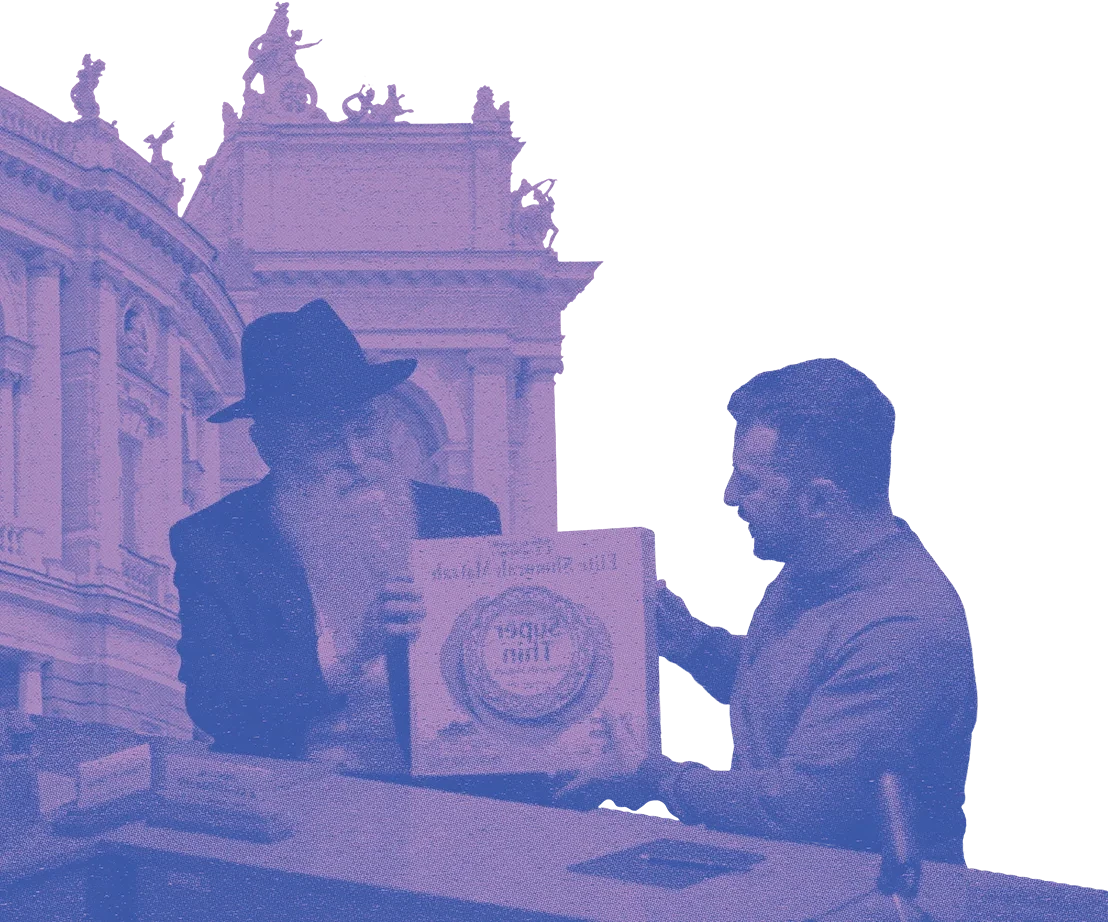 "'Zelenskyy, a Jewish Nazi': The Use of Anti-Semitic Tropes by Russian Propaganda Against Ukraine." https://en.detector.media/post/zelenskyy-a-jewish-nazi-the-use-of-anti-semitic-tropes-by-russian-propaganda-against-ukraine. Accessed 31 Dec. 2025.
YouTube. https://www.youtube.com/watch?v=AoPY72pWXRI. Accessed 31 Dec. 2025.
Jewish Virtual Library. "The Pale of Settlement." https://www.jewishvirtuallibrary.org/the-pale-of-settlement. Accessed 31 Dec. 2025.
"Anniversary of the Pale Settlement Decree." Żydowski Instytut Historyczny. https://www.jhi.pl/en/articles/anniversary-of-the-pale-settlement-decree,243. Accessed 31 Dec. 2025.
Jewish Virtual Library. "Russia Virtual Jewish History Tour." https://www.jewishvirtuallibrary.org/russia-virtual-jewish-history-tour. Accessed 31 Dec. 2025.
The YIVO Encyclopedia of Jews in Eastern Europe. https://encyclopedia.yivo.org/article/244. Accessed 31 Dec. 2025.
The YIVO Encyclopedia of Jews in Eastern Europe. https://encyclopedia.yivo.org/article/235. Accessed 31 Dec. 2025.
Romerstein, Herbert. 2004. "Divide and Conquer: The KGB Disinformation Campaign against Ukrainians and Jews." The Institute of World Politics, November 2004. https://web.archive.org/web/20230405190737/https://www.iwp.edu/papers-studies/2004/11/01/divide-and-conquer-the-kgb-disinformation-campaign-against-ukrainians-and-jews/
Meduza. 2023. "Putin Says Zelensky 'Isn't Jewish but a Disgrace to the Jewish People'." https://meduza.io/en/news/2023/06/16/putin-says-zelensky-isn-t-jewish-but-a-disgrace-to-the-jewish-people
Correspondent, J. 1997. "Ethnicity Line Axed from Russian Passports." The Jewish News of Northern California, October 31, 1997. https://jweekly.com/1997/10/31/ethnicity-line-axed-from-russian-passports
Images used: Oleksandr Kravchuk on Flickr, CC BY 2.0 https://creativecommons.org/licenses/by/2.0/deed.en, Adam Jones on Flickr, CC BY 2.0, https://creativecommons.org/licenses/by/2.0/deed.en, t_y_l on Flickr, CC BY-SA 2.0, https://creativecommons.org/licenses/by-sa/2.0/deed.en, jans canon, CC BY 2.0, https://creativecommons.org/licenses/by/2.0/deed.en