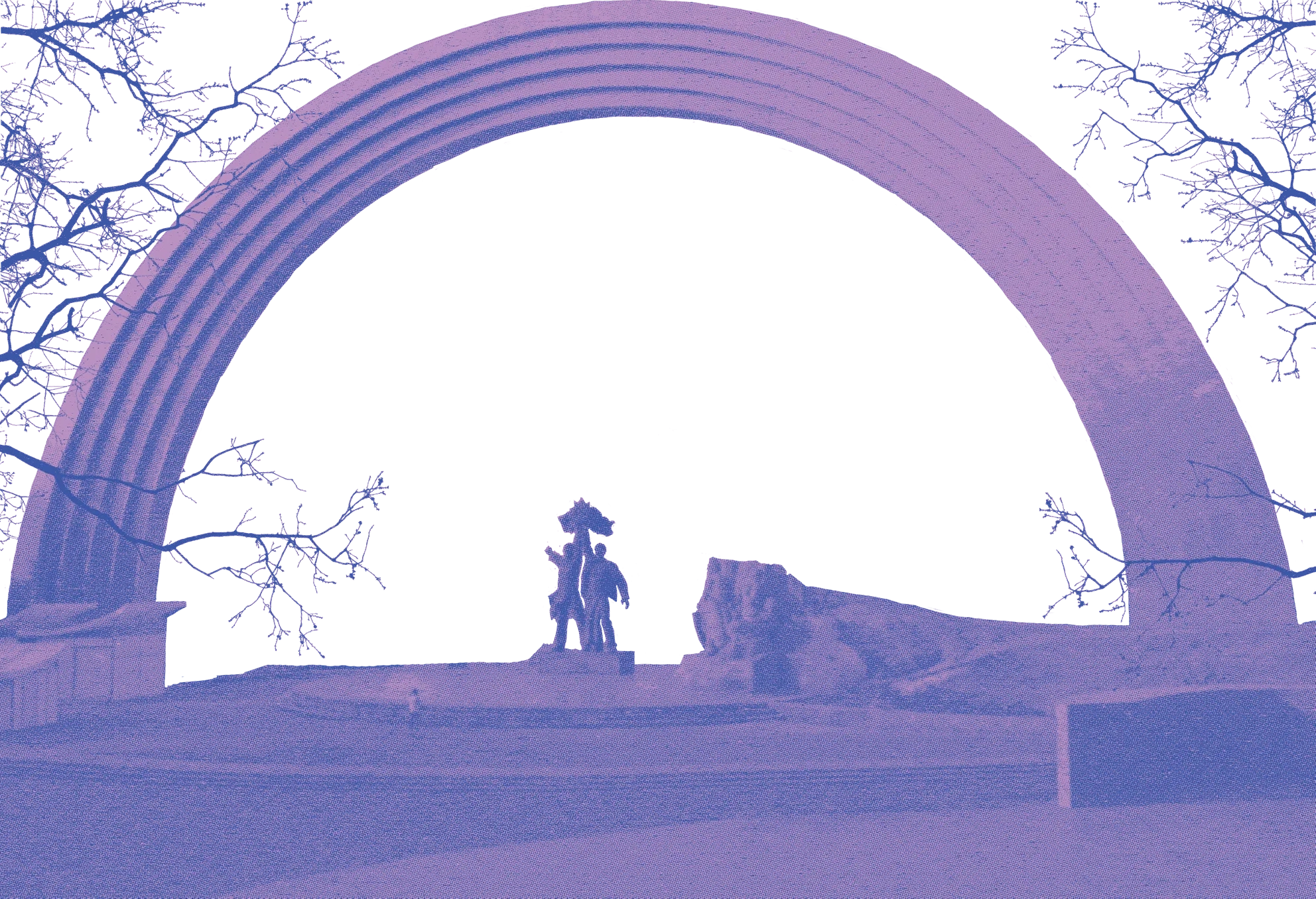
THE ARKA SVOBODY UKRAYINS'KOHO NARODU
ANNA-MARIIA BRYNCHAK
In Kyiv, monuments tell stories about the past. The Arka Svobody Ukrayins'koho Narodu (Arch of Freedom of the Ukrainian People), hereafter referred to as the Arch, is a notable example. Built under Soviet rule in 1982 as the 'People's Friendship Arch' to symbolise Russian-Ukrainian unification, the Arch's meaning has shifted significantly since Ukraine's independence. Rather than being an outdated edifice, it now serves as a prominent site for historical remembrance, representing the ongoing struggle between Ukrainian and Russian ideologies while simultaneously expressing fundamentally opposing views of the two nations' past and present relationships.
The Arch is a modern battle of narratives. By changing its name and appearance after Russia's full-scale invasion, Ukraine confronted the Arch's Soviet heritage and asserted its narrative of sovereignty. This strategy has helped Ukraine demonstrate its identity and challenge Russian efforts to impose historical unity and legitimise its invasion. This essay will examine concepts of memory and power, discuss the Arch's Soviet history, and explore changing attitudes before and after 2022. Finally, it will show how the Arch's transformation serves as a form of resistance and continues to shape power dynamics.
MEMORY, POWER, AND SYMBOLISM
To understand how sites like the Arch function now, we must consider ideas from memory studies and political theory. Collective memory is a crucial idea which goes beyond the individual and refers to groups of people recalling the past collectively. Jan Assmann (2008) describes collective memory as a dynamic, ongoing process in which groups actively create and revise their shared sense of history. It is about how societies as a whole choose to remember, emphasise, and forget — a process which is frequently impacted by contemporary problems and perspectives. The process of creating collective memory is tightly linked to power dynamics. As Birgit Molden highlights, collective memory is a space where different groups compete (2016). Powerful groups, such as states, typically want to establish a dominant, official narrative of history, which Molden refers to as 'mnemonic hegemony'. This is their attempt to shape how history is perceived and used; however, this is rarely the only narrative. Other groups sometimes generate 'resistant pasts' — alternate methods of remembering that contradict the dominant narrative and establish different identities or interpretations of events.
Monuments, museums, and historical sites are important places for these power struggles over collective memory to play out publicly. They are overflowing with political symbolism, serving as physical reminders that evoke specific stories, identities, and feelings about the past. Governments and other groups frequently use these symbols to push for their own goals or reinforce particular ideologies. When various groups disagree or actively contest the meaning of these sites, "mnemonic battles" occur — direct clashes over what the past means in the present. The Arka Svobody Ukrayins'koho Narodu, with its heated history and growing symbolism, provides a compelling case study for these theoretical concepts. Analysing the deliberate changes made to the Arch's name and design, as well as the reactions they provoked, help us see power dynamics at work and fully understand how different groups attempt to dominate the story of the past to influence the present and future.
SOVIET FRIENDSHIP
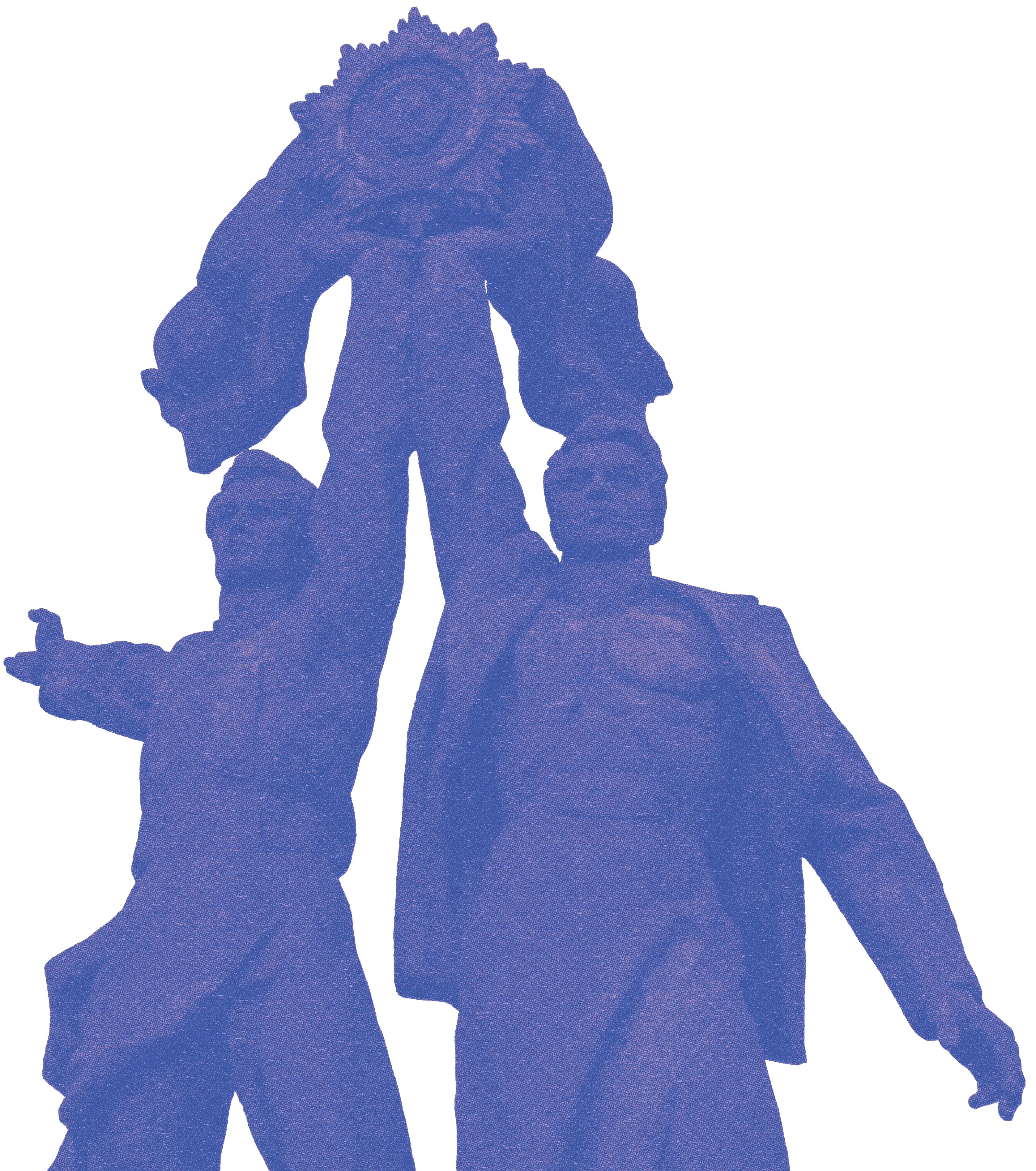
The Arch, built in 1982 during the Soviet era as the People's Friendship Arch, was unveiled as part of the ceremonies for the USSR's 60th and Kyiv's 1,500th anniversaries. It was built to represent the 'unification of Ukraine with Russia' and highlight their relationship within the context of the Soviet Union. This message was conveyed through the Arch's design: its rainbow-esque form was joined by sculptures, including a bronze group of Russian and Ukrainian workers holding a Soviet Order of Friendship of Peoples. This visual reinforced the Soviet ideology of fraternal unity among the republics, focusing on Russian-Ukrainian ties and the nations' supposed shared destiny. Building such a monument in Kyiv aimed to embed this narrative into the city's collective memory and enforce loyalty to the Soviet state's vision. The goal was clear: reinforce Moscow's centrality within contemporary thought and suppress any narratives of an independent Ukrainian identity.
SHIFTING PERCEPTIONS
Following Ukraine's declaration of independence in 1991, the symbolic meaning of the Arch underwent significant re-evaluation amid the changing landscape of Ukrainian collective memory. According to Assmann, collective memory is actively produced in the present, and the truth of a sovereign Ukrainian state required a departure from the previous Soviet historical narrative (2008). As a result, the Arch evolved from a symbol of official Soviet mnemonic hegemony into a contested site, with aspirations for a separate national identity challenging its original meaning.
The decades leading up to the full-scale invasion in 2022 were marked by a complex dynamic regarding the legacy of Soviet monuments. While large scale, state-driven decommunisation initiatives were not always applied to symbols, places like the Arch became sites for implicit and explicit contestation. The monument's continued physical presence emphasised the ongoing struggle between inherited Soviet symbols and the emerging independent Ukrainian historical consciousness.
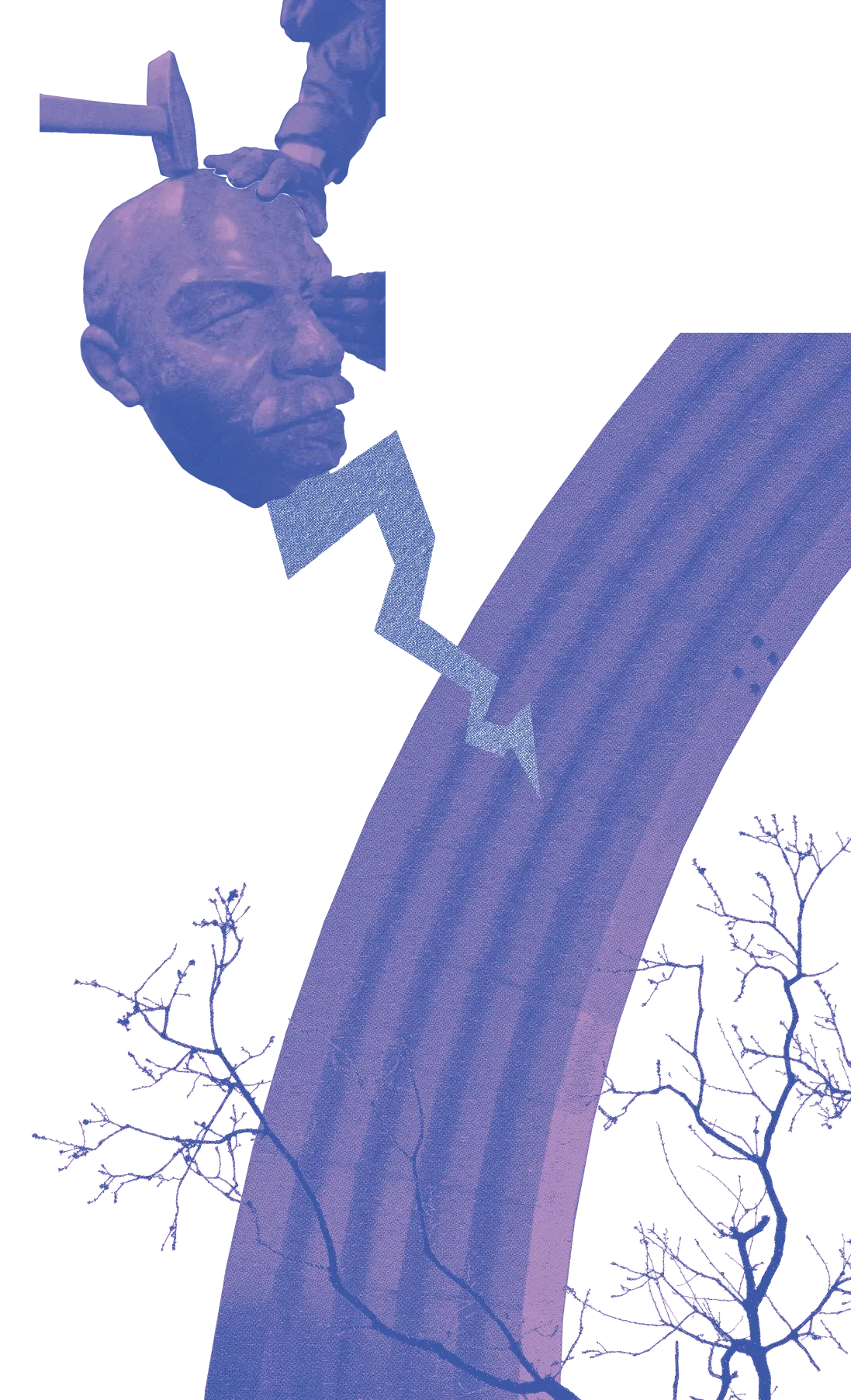
Crucially, this period saw the formation of more resistant pasts within Ukrainian collective memory and saw increasingly aggressive public action against Soviet monuments, including vandalism (Liubarets, 2017). These acts, which began with short-term artistic installations and grew into more overt visual protestations, were grassroots mnemonic battles. They mattered not only as acts of destruction but also as intentional efforts to dispute the original Soviet narrative of the monuments and offer alternative histories. These unofficial contests revealed shifting power over memory control and interpretation, leading the government to consider decisive actions against the Arch.
THE INTENSIFICATION OF THE BATTLE: THE IMPACT OF THE 2022 FULL-SCALE INVASION
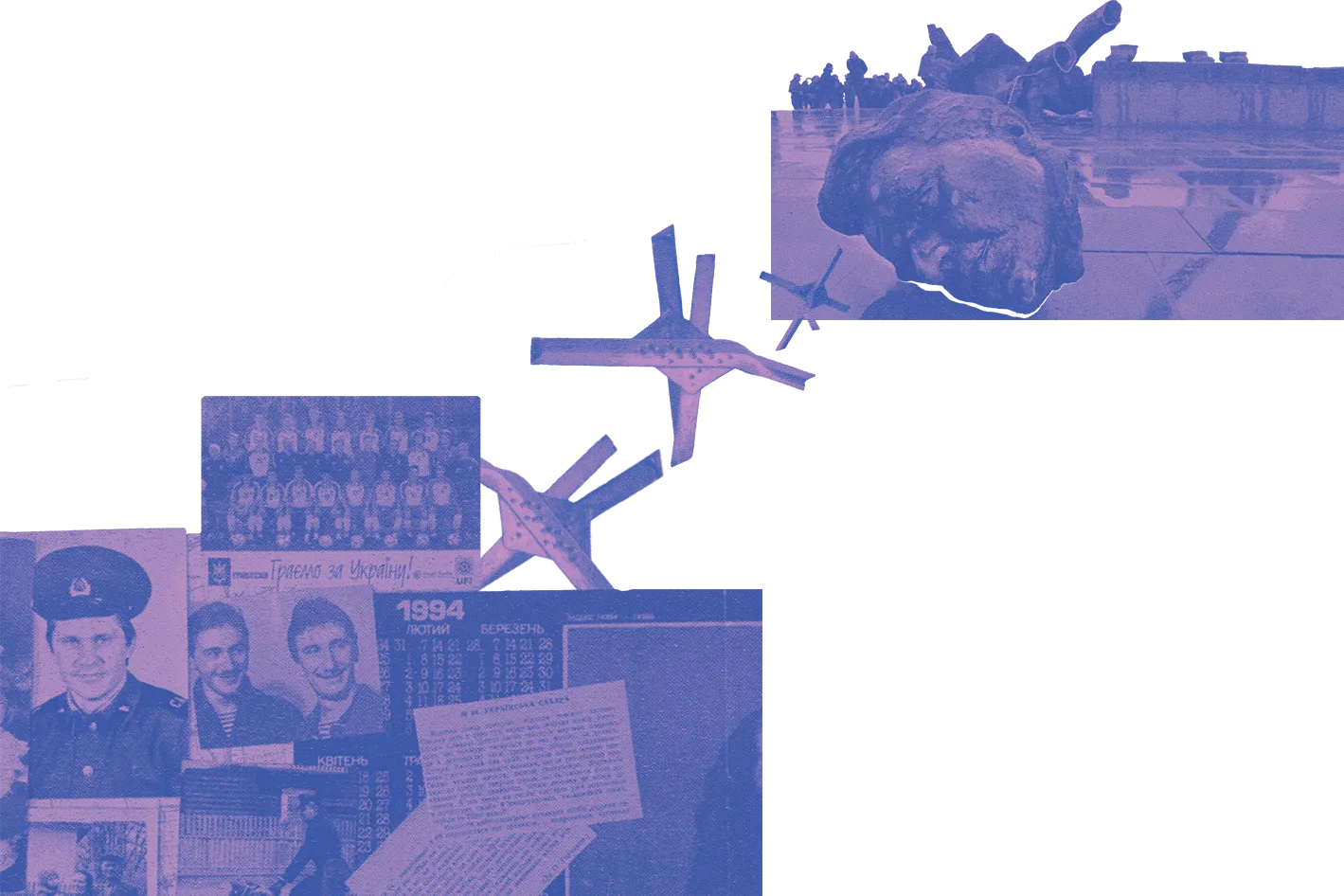
The full-scale Russian invasion in February 2022 drastically changed the mnemonic landscape, heightening disputes over sites like the Arch. With Russia's open aggression and denial of Ukrainian sovereignty, the Arch's original meaning of 'eternal friendship' became not only obsolete but offensive. This crisis turned long-simmering tensions over Soviet symbols into an urgent need for reinterpretation. The invasion accelerated decommunisation and derussification across Ukraine (Betlii, 2022; Kowalchuk, 2024). Soviet-era monuments now stood as intolerable reminders used to justify aggression. In 2024, the УІНП (Ukrainian Institute of National Memory) declared the Arch to be a symbol of Russian imperial policy, an example of growing public recognition of the monument's problematic history. Now, the physical presence of the Arch, previously a potentially ambiguous relic, became an essential platform for expressing Ukraine's determination to control its own historical narrative and physically depart from the past which Russia sought to exploit. As a result, the invasion created a new, urgent imperative for actively transforming the site, addressing false narratives, and reconfiguring the power relations ingrained in the urban landscape.
POWER RELATIONS PRODUCED IN THE PRESENT
The contestation and intentional re-recognition of the Arch have radically transformed the dynamics of power which surround this central site of memory in modern Ukraine. What was once a monument meant to symbolise Soviet strength and a narrative of Russian-Ukrainian unity is now a concrete symbol of Ukrainian sovereignty and a site for asserting a separate national identity.
This shift represents a substantial rethinking of who has the authority to define the past and its relevance in the present. Through the official renaming of the Arch and other visual interventions, the Ukrainian state and society are actively opposing and deconstructing Russian mnemonic hegemony inscribed in the urban landscape.
By replacing the previous narrative of friendship with one of freedom, Ukraine has seized the ability to shape its collective memory independently. This directly challenges Russia's ambitions to preserve its sphere of historical and cultural influence. Thus, the Arch's transformation is more than just a simple renaming, it is also about taking control of a part of Ukraine's national narrative which was previously determined by Moscow.
The power relations which have resulted are complex. First, the power to define national identity has shifted. The Arch, which now represents Ukrainian freedom, contributes to a collective memory emphasising independence, resilience, and a distinct break from the Soviet past. This reinforces Ukrainian national sovereignty, countering Russia's notion of historical unity. Second, the shift reinforces Ukraine's assumption of authority over its land and symbols. Decisions about the Arch are now made in Kyiv, with the interests of the Ukrainian public in mind. Finally, the Arch becomes a visible marker of resistance. Its altered state serves as a daily reminder of the ongoing struggle against Russian aggression and as a symbol of defiance, shaping both internal and international perspectives.
CONCLUSION
The Arka Svobody Ukrayins'koho Narodu provides a compelling case study for the interaction between collective memory and power dynamics. Originally designed as an instrument of Soviet mnemonic hegemony, the Arch became a focus for anti-Soviet feelings after independence. The 2022 invasion served as a catalyst, bringing the fallacy of the original narrative to light and resulting in decisive changes. Ukraine's strategic changes, renaming and redesigning the Arch, reflect a powerful cultural counter-offensive. These activities are more than just decommunisation. They are political
 declarations of sovereignty, the recovery of an historical narrative, and a symbol of opposition to Russia's weaponisation of history.
BIBLIOGRAPHY
Assmann, A. (2008) 'Transformations between History and Memory', Social Research, 75(1), pp. 49–72.
Betlii, O. (2022) 'The Identity Politics of Heritage: Decommunization, Decolonization, and Derussification of Kyiv Monuments after Russia's Full-Scale Invasion of Ukraine', Journal of Applied History, 4(1–2), pp. 149–169.
Kotsur, Lesya. "Очищення публічного простору України від російських ідеологем 'братнього народу' та 'возз'єднання' після 24 лютого 2022 року." Креативний Потенціал Економіки Культури у Повоєнній Відбудові України, 2023, pp. 101–5.
Kowalchuk, T. (2024) 'Derussification Of The Public Space In Ukraine As Conditioned By The Full-Scale Russian-Ukrainian War', Intermarum History Policy Culture, (14), pp. 144–159.
Liubarets, A. (2017) 'VANDALISM as a TOOL for UKRAINIAN POLITICS of MEMORY of SOVIET MONUMENTAL HERITAGE (2009–2015)', Український історичний збірник, (19), pp. 324–333.
Molden, B. (2016) 'Resistant pasts verses mnemonic hegemony: On the power relations of collective Memory', Memory Studies, 9(2), pp. 125–142.
Salo, E. (2023) 'The Weaponization of Heritage: The Examination of Protecting, Destroying, and Assimilating Heritage as a Weapon in Irregular Warfare', Texas Journal of Law and Political Science, 16, pp. 708–.
Sklokina, I. (2024) 'World War II Monuments in Ukraine: Protection, Dismantling, Reuse since 2022', kunsttexte.de — Journal für Kunst- und Bildgeschichte, (1), pp. 1–15.
УІНП (Ukrainian Institute of National Memory). (2024) Пояснюємо висновок Експертної комісії УІНП про Арку дружби народів.
Images used: Jorge Láscar on Flickr, CC BY 2.0 https://creativecommons.org/licenses/by/2.0/deed.en, Грибюк Руслан Володимирович on Wikipedia Commons, CC BY-SA 4.0, https://creativecommons.org/licenses/by-sa/4.0/deed.en, Mstyslav Chernov/Unframe on Wikipedia Commons, CC BY-SA 3.0, https://creativecommons.org/licenses/by-sa/3.0/deed.en, olavXO on Flickr, CC BY 2.0 https://creativecommons.org/licenses/by/2.0/deed.en, Rasal Hague on Wikipedia Commons, CC BY-SA 3.0, https://creativecommons.org/licenses/by-sa/3.0/deed.en